


Selective support for intl law troubling










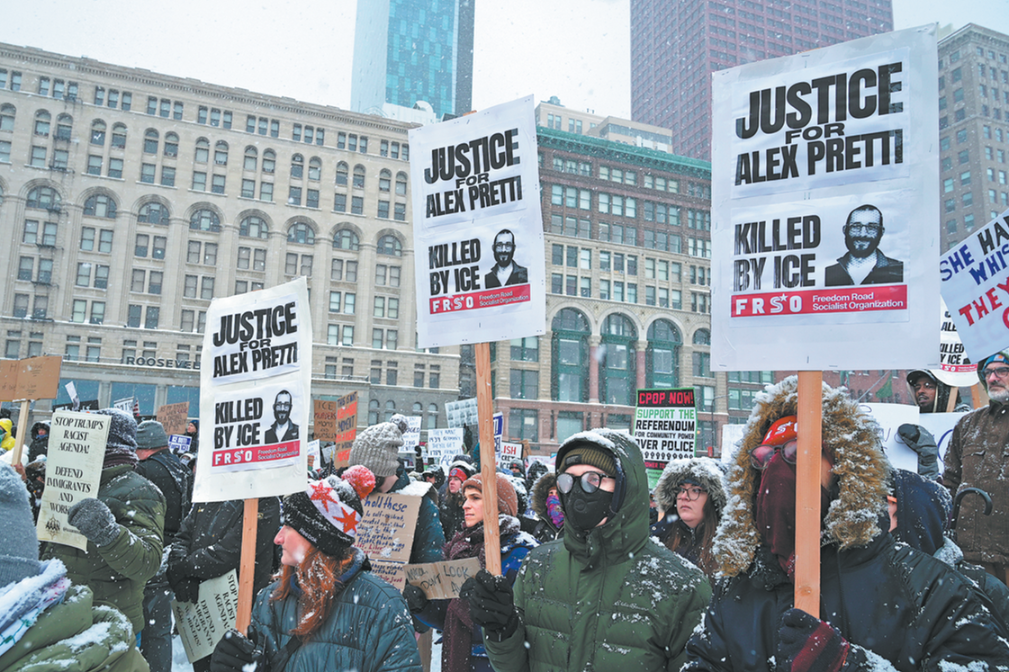
United States President Donald Trump campaigned for the presidency on the promise that he would put an end to US involvement in "forever wars". However, just a year into his second term, his administration has waged war against Iran, forcibly seized Venezuela's president, and carried out military strikes against Yemen, Syria, Iraq, Somalia and Nigeria, while threatening to bomb Mexico and Colombia.
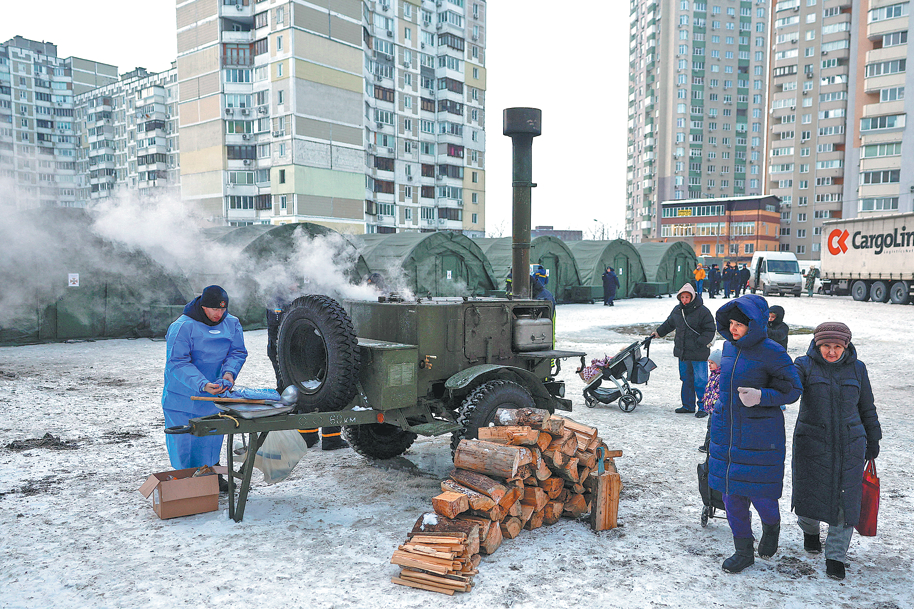
Much of this flagrant imperialism has gone virtually without remark in Europe, as major European governments essentially support the US actions and, aside from their personal feelings, are desperate to stay in the president's good books, hoping they can persuade him to continue underwriting the proxy war against Russia in Ukraine.
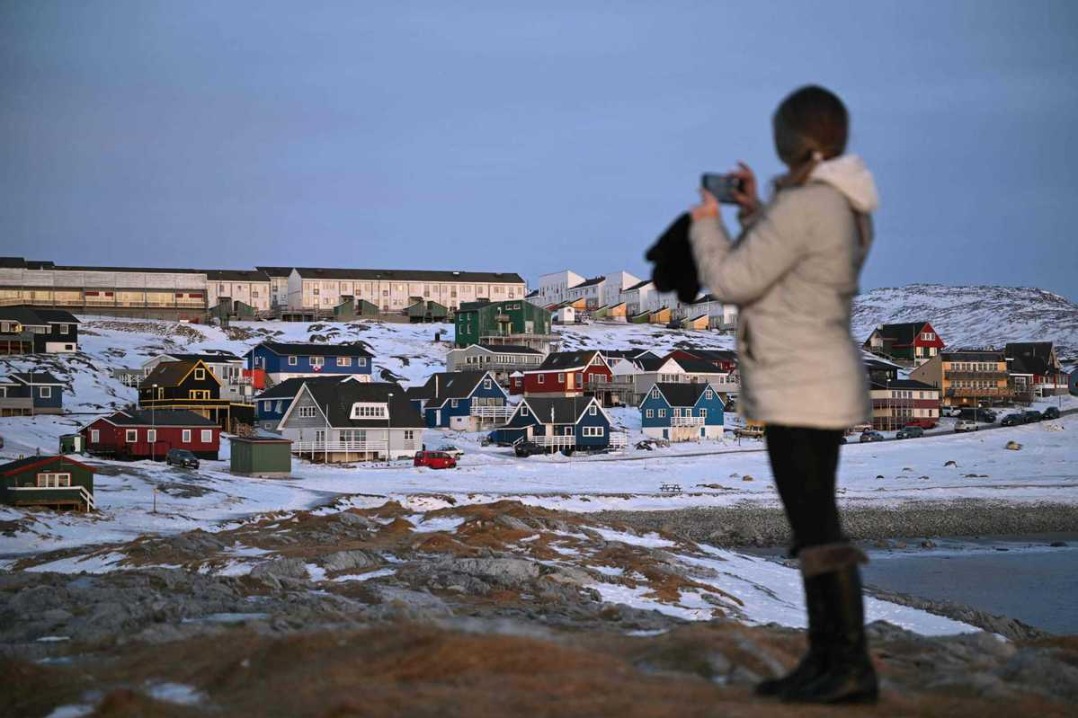
However, Trump's latest threat — to take control of Greenland — has provoked a rare show of public disapproval from European leaders.
On Jan 6, the national leaders of France, Germany, Italy, Poland, Spain, the United Kingdom and Denmark released a joint statement insisting that "Greenland belongs to its people" and that "it is for Denmark and Greenland, and them only, to decide on matters concerning Denmark and Greenland".
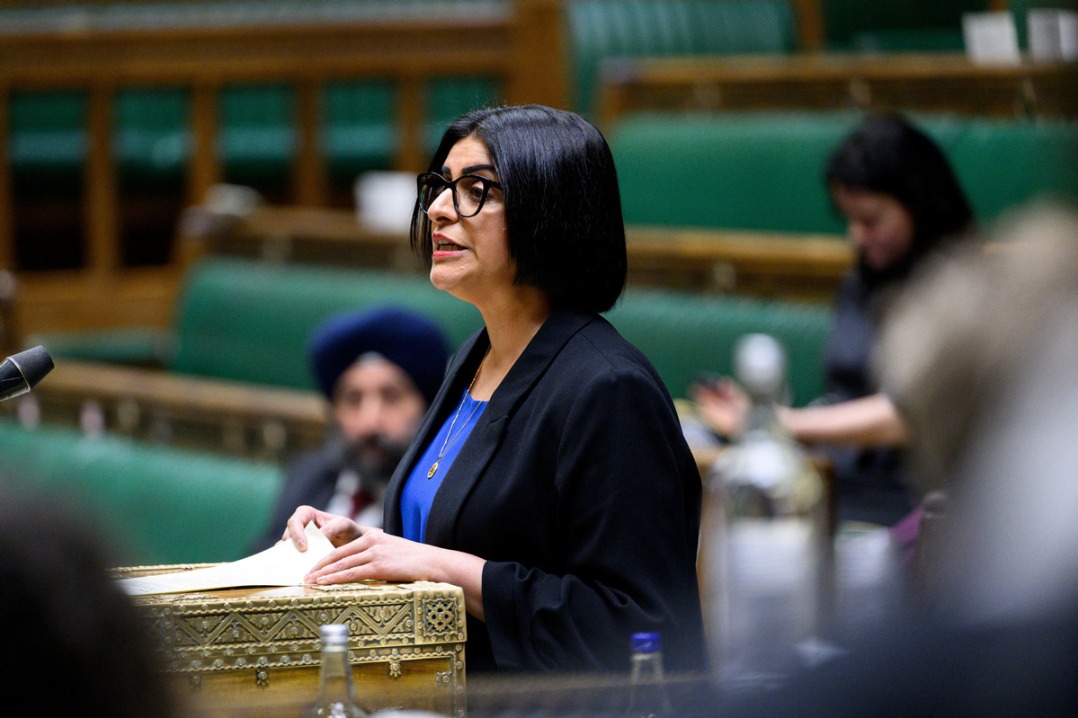
And after the US president said he will impose fresh tariffs on European allies opposed to the American takeover of Greenland, UK Prime Minister Keir Starmer said the measure was "completely wrong", while French President Emmanuel Macron called it "unacceptable".
Quite remarkably, the leaders of the seven European countries made a claim to be "upholding the principles" of the United Nations Charter, including sovereignty, territorial integrity and the inviolability of borders. These, they said, "are universal principles, and we will not stop defending them".
The hypocrisy is nothing short of staggering. Where were these "universal principles" when, just some days earlier, US armed forces bombed Caracas and forcibly seized Venezuelan President Nicolas Maduro? When he was paraded through the streets of New York City and locked in a cell at the Metropolitan Detention Center in Brooklyn on patently absurd charges of drug trafficking? When Trump announced that the US would take control of Venezuela's oil industry?
All Starmer could muster was a remark that "we regarded Maduro as an illegitimate president and we shed no tears about the end of his regime", trying (and failing) to give himself some plausible deniability by adding, "I reiterate my support for international law."
The universal principles of the UN Charter were again missing in action when the US Navy — with active support from Britain — seized oil tankers in international waters in order to enforce illegal unilateral sanctions against Venezuela, Russia and Iran.
As Alex Lo wrote in the South China Morning Post: "It ought to be clear that the enforcement of international law and sanctions is only for weak countries and enemies of the West. This is why (former Philippine president) Rodrigo Duterte and Maduro are in detention waiting for trial, while US President Donald Trump and Israeli leader Benjamin Netanyahu go their merry unrestrained way to pursue war."
The case of Greenland is not simple for the US' NATO allies to manage. The Danish kingdom has ruled Greenland as a colony since 1721, when it was seized from the indigenous Inuit people. In 1953, Greenland's formal status was changed to an integral part of the Kingdom of Denmark, with some autonomy, but its foreign policy and defense continue to be controlled by Copenhagen.
The US' interest in Greenland is believed to be principally the containment of China and Russia. The US administration said on Jan 4: "We need Greenland from a national security situation. It's so strategic. Right now, Greenland is covered with Russian and Chinese ships all over the place."
Therefore, "the president and his team are discussing a range of options to pursue this important foreign policy goal, and of course, utilizing the US military is always an option at the commander-in-chief's disposal", according to a White House statement.
The proposal to transfer colonial ownership of Greenland from Denmark to the US is thus inextricably bound up with the broader global campaign for maintaining US hegemony and preventing the emergence of a multipolar world order. It goes hand in hand with the abduction of Venezuelan President Maduro; the war on Iran; the proxy war against Russia; the supply of billions of dollars' worth of weapons to separatists in China's Taiwan; the threats against Cuba and Mexico; the subversion of democracy in Honduras and Argentina; and the bid to force NATO countries to spend even more of their taxpayers' money on the US military-industrial complex.
The US wants to control Arctic shipping lanes; it wants to militarize the region, expanding its military bases; and it wants to have exclusive access to Greenland's natural resources — including rare earth minerals.
Strategically speaking, European leaders are aligned with the US in all these matters. However, although the US president said he had reached an agreement with NATO on a Greenland framework, the US takeover of the territory of a NATO country would be emblematic of a total breakdown of the transatlantic alliance, and could well spell the end of NATO itself.
Perhaps politicians should consider the views of the Greenlanders themselves. They have made it clear that they do not want to be controlled by the US.
The author is a British political commentator and co-founder of Friends of Socialist China.
The views do not necessarily reflect those of China Daily.