



Wuhan scientist honored for turning lab science into real-world farming solutions









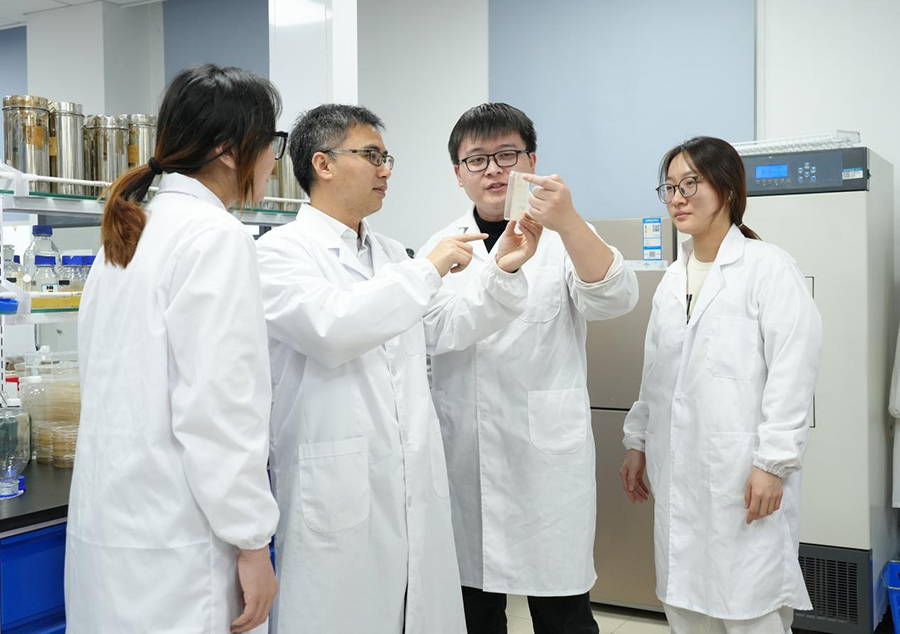
Professor Peng Donghai of Huazhong Agricultural University in Wuhan, Hubei province, has received a top award in recognition of his long-term work turning laboratory science into real-world farming solutions.
Peng has spent more than 20 years studying agricultural microorganisms, with a focus on insecticidal proteins and biological pest control. His research team has built a large agricultural microbial gene resource repository and supported the commercialization of its findings, generating nearly 100 million yuan ($14.4 million) in technology transfer income.
A key turning point in Peng's work came when he moved away from conventional screening methods that prioritized the most powerful pest-killing microbes. Instead, he began examining weaker, overlooked strains. Using this approach, he successfully cloned cry7Ba1, a pest-fighting protein. This work became the first such insecticidal protein from China to receive a US patent and opened a new door for research into the evolution and function of Bacillus thuringiensis (Bt) strains.
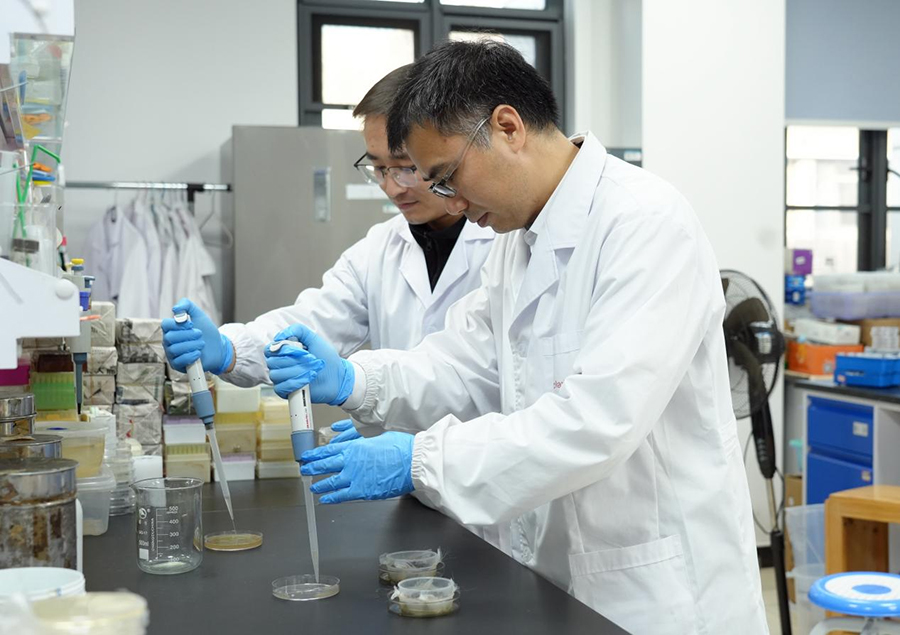
In 2011, his team initiated a nationwide sampling project to support this research. They enlisted tens of thousands of teachers and students to collect more than 21,000 soil samples from over 2,680 towns across China. The effort resulted in the preservation of more than 53,000 Bt strains, giving them a huge database to study.
Using this library, the team figured out how the best pest-fighting strains develop. They built a special platform to find useful genes faster and cheaper, creating one of the world's largest collections of these natural insecticide genes.
Recently, they've tackled one of farming's toughest problems: microscopic worms called nematodes that attack plant roots. They've identified 102 Bt strains that fight these worms and discovered several new pest-fighting proteins, work that has been published in journals such as Science Advances and Nature Communications.
Beyond the laboratory, Peng's team has worked with Wuhan Kernel Bio-tech to turn their research into usable products. In 2021, they launched a commercial nematode-fighting agent based on their Bt discovery. Field tests have shown efficacy rates ranging from 81.6 to 91.1 percent against root killers. The product has since been applied to nearly 4 million mu (about 267,000 hectares) of farmland nationwide.
Their work received Hubei province's 2024 Technical Invention Award, first prize, and has drawn increased interest from domestic pesticide firms in biological alternatives to chemical treatments.
Peng said his team plans to expand international collaboration in future projects, with the aim of applying microbial and genetic research to food security and ecological protection on a broader scale.
Liu Xueru contributed to this story.






- Wuhan scientist honored for turning lab science into real-world farming solutions
- Citizen rewarded 200 yuan for turning over ancient sword to Hubei museum
- Sea of clouds creates picturesque scene in Yunnan
- Chinese-registered container vehicles begin shipping to Nepal for the first time
- ZEISS Vision factory in Guangzhou joins Global Lighthouse Network
- China warns of 'catastrophic disasters' from unchecked Japanese militarist ambitions