



Amended statute focuses on drone safety









China has adopted a revised Civil Aviation Law that imposes tighter regulatory oversight on unmanned aircraft, updating its legal framework to keep pace with the rapid shifts in the aviation sector.
The amended law was passed on Saturday at a session of the Standing Committee of the National People's Congress, China's top legislature, and will take effect on July 1, 2026.
The Civil Aviation Law is the country's primary statute governing aviation activities. It establishes rules to protect national airspace sovereignty, ensure safe operations, and safeguard the rights of airlines, airports, manufacturers and passengers.
The revised law comprises 16 chapters and 262 articles. Lawmakers said the update is intended to align regulations with industry developments, new technologies and emerging business models. It also seeks to support the growth of aviation manufacturing, air transportation and the low-altitude economy, which includes commercial drone operations.
A key feature of the revision is stricter management of unmanned civil aircraft. Entities engaged in the design, production, import, maintenance and operation of civil drones are required to obtain airworthiness certification from the Civil Aviation Administration of China, unless exempted. Manufacturers are required to assign a unique identification code to each aircraft to improve traceability.
Yang Ying, head of the CAAC's Department of Policy, Law and Regulation, said the revision responds to new requirements facing the sector while balancing national realities with international rules.
"The revised law draws on experience from the implementation of the existing Civil Aviation Law, places aviation safety in a prominent position, and improves institutional design in key areas," she said.
Yang noted that the law adopts a development-oriented approach by encouraging the growth of general aviation and fostering a diversified market. It introduces a classified management system for general aviation and consolidates operating permits and air operator certificates into a single license, she added.
According to the Legislative Affairs Commission of the NPC Standing Committee, the low-altitude economy has become a strategic emerging industry, and the revision ensures access to airspace resources for low-altitude activities, besides adding dedicated provisions on airworthiness certification for unmanned aircraft.
The Civil Aviation Law, which was first enacted in 1995, has undergone six partial revisions over the past three decades. The latest amendment comes amid the rapid expansion of China's civil aviation sector.
The number of domestic commercial airports has more than doubled from just over 130 in 1995 to about 270 in 2025, with more than 40 airports handling over 10 million passenger trips annually.
Transportation volumes have also recorded historic growth. The annual passenger volume surged from about 51 million trips in 1995 to about 770 million in 2025, while air cargo and mail volumes increased from about 1 million metric tons to 10 million tons during the same period.
The number of operational aircraft in China's commercial fleet has increased to about 4,600, including more than 200 domestically built ones. General aviation and low-altitude activities have expanded further, with 5,446 registered general aviation aircraft and around 3.18 million registered drones nationwide.
The revised law further strengthens safety requirements. It explicitly bans the use of lasers that could interfere with airport navigation and lists prohibited activities that may disrupt the electromagnetic environment around airports.
The amendment refines rules on aircraft nationality registration, recognizes the legal validity of electronic transportation documents, and clarifies carrier liability for passenger injury or death under a two-tier compensation framework.
Cao Yin contributed to this story.
luowangshu@chinadaily.com.cn
- Autumn grain purchases exceed 200m tons in China
- China adopts revised Civil Aviation Law to update regulations for the sector
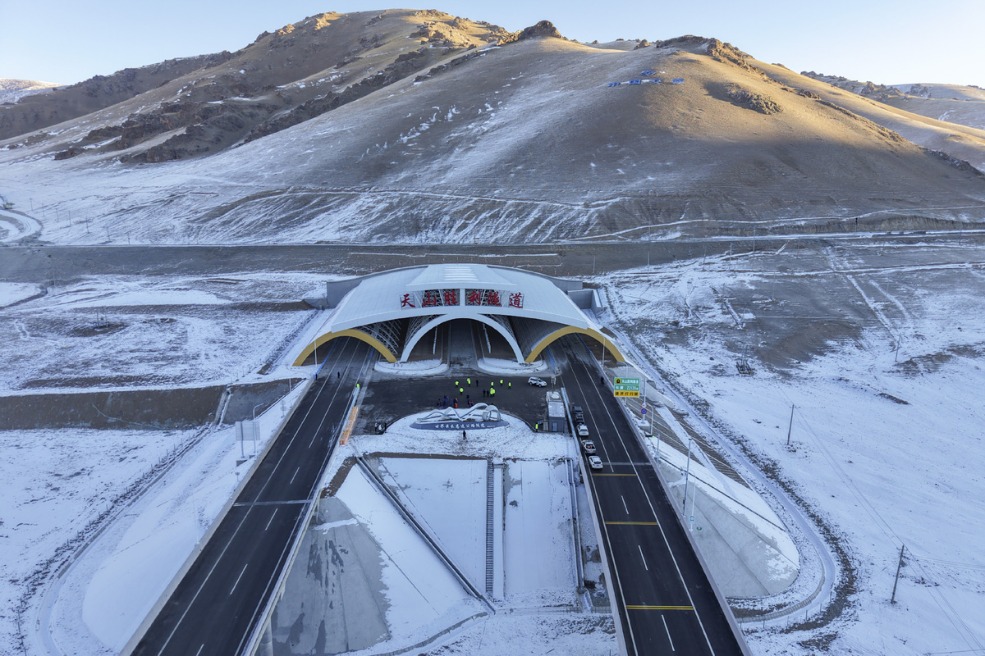
- World's longest expressway tunnel opens to traffic, crossing Tianshan Mountains
- China's top industry regulator unveils extensive plan to foster emerging, future industries
- World's longest expressway tunnel opens to traffic in Xinjiang



- Amended statute focuses on drone safety
- Liaoning fire: Report urges legal action against restaurant operator and seven others
- Historical Han Dynasty slips go on display in Hohhot
- Shanghai unveils steps to build sci-tech innovation corridor in Yangtze River Delta
- Xiangchao concludes with Yongzhou claiming championship
- Answers