


China, Africa deepen modernization ties
Collaboration enters critical window as analysts underscore inclusive growth










As China and Africa align their modernization agendas through platforms such as the Forum on China-Africa Cooperation, analysts say the next five years will be critical in translating shared history, strategic trust and practical cooperation into inclusive and sustainable development outcomes.
China's experience in infrastructure-led growth, technology advancement and poverty reduction — underpinned by long-term planning and strong governance — is increasingly shaping Africa's own pursuit of modernization, they said.
Peter Kagwanja, president and chief executive of the Africa Policy Institute in Nairobi, said China and Africa have realigned their strategic ties across multiple platforms to achieve mutual interests.
Past reliance on externally imposed models underscores the need for China-Africa cooperation to be anchored in shared history, Kagwanja said.
He traced the partnership to the ancient Silk Road, where both civilizations exchanged goods, ideas and culture. Today, they collaborate as equal partners, aligning China's modernization with Africa's vision for an "African Renaissance" through the Forum on China-Africa Cooperation.
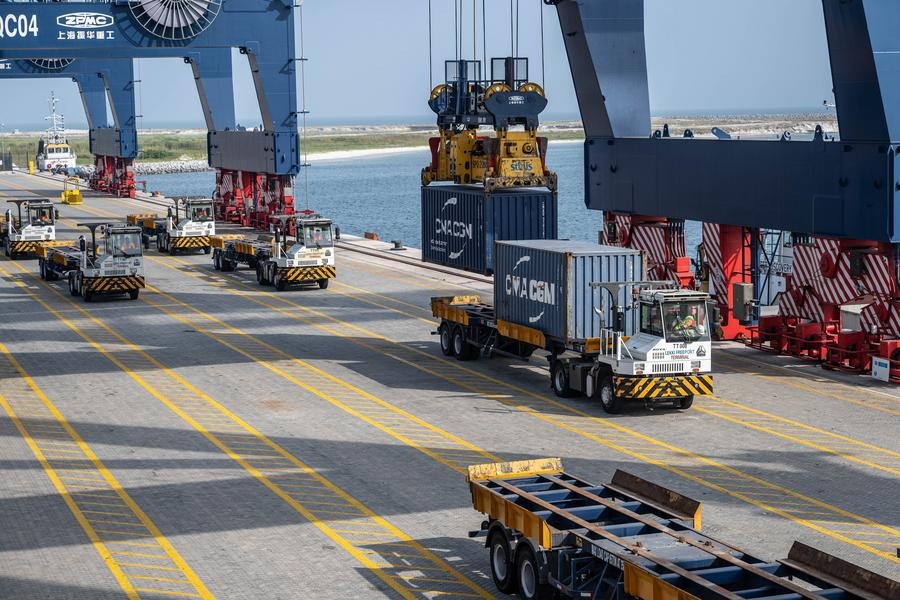
"Through FOCAC, China has channeled more than $250 billion to support African modernization through infrastructure projects such as roads, railways and ports," he said. "It has also supported Africa's Agenda 2063 and Africa's efforts to realize its continental free trade area."
The 2024 FOCAC Beijing Summit produced a new modernization path under the Beijing Action Plan 2025-2027, creating a blueprint for an all-weather China-Africa community with a shared future for the new era.
Kagwanja highlighted the challenges facing Global South countries, saying they continue to encounter obstacles in pursuing independent modernization.
Hegemonism, unilateralism and anti-globalization trends undermine democratic global governance, he said, adding that Africa should take advantage of China's zero-tariff policy to further enhance its productive forces.
Self-driven path
Cavince Adhere, an international relations scholar in Kenya, said China's development journey demonstrates the viability of a determined, self-driven growth path.
"Similarly, Africa is a continent on the rise, brimming with youthful dynamism, rich resources and a collective resolve embodied in the African Union's Agenda 2063,"Adhere said.
He highlighted opportunities for co-investment in localized value chains, agro-processing, mineral beneficiation and light manufacturing, supported by the African Continental Free Trade Area.
China's strengths in 5G, fintech and artificial intelligence can accelerate Africa's digital transformation, creating smart cities and digital villages, he added.
Joint investments in renewable energy, climate-resilient agriculture and green manufacturing can drive sustainable growth, Adhere said, while scholarships, vocational training and public health collaboration can also further empower African youth.
Success, he noted, depends on mutual understanding, alignment with local priorities and navigating complex geopolitics.
Stephen Ndegwa, executive director of the think tank South-South Dialogues in Nairobi, emphasized the need for joint investment in digital infrastructure, cross-border e-commerce, talent exchange programs, cybersecurity, digital finance and smart city initiatives.
Modernization is not a solitary journey, Ndegwa said, pointing to China's experience of vision, discipline and long-term planning.
With Africa's youthful population and digital curiosity, deeper cooperation — anchored in openness, innovation and security — could make the next five years transformative for both regions as equal partners shaping a shared future.
He also highlighted key challenges, including high costs and investment risks, uneven connectivity, skills shortages, fragmented regulations and gaps in digital literacy.
Coordinated investment, policy alignment and public engagement will be essential to overcoming these obstacles and ensuring inclusive, sustainable digital transformation, Ndegwa said.
Dennis Munene, executive director of the China-Africa Center at the Africa Policy Institute in Nairobi, underscored the need to counter false narratives that undermine the developmental gains of China-Africa cooperation.
He urged structured and collaborative approaches, including joint research programs, to document, analyze and communicate the true story of China-Africa relations.