


Hundreds of works on traditional Tibetan medicine go digital









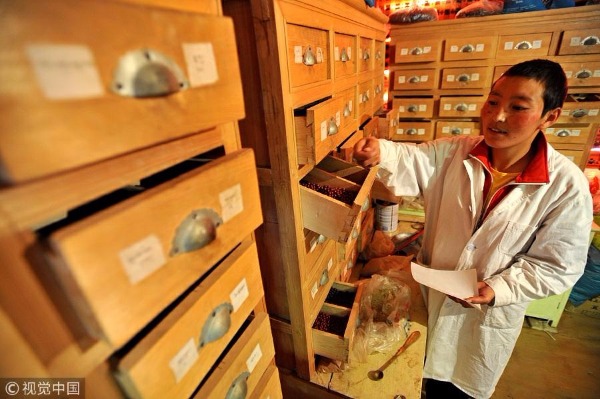
XINING -- The Qinghai Tibetan medicine research institute has completed the digitalization of more than 600 works on traditional Tibetan medicine.
The books and documents were created between the 7th century and the early 20th century.
"It's of great significance to share the valuable research materials with public through digitalization," said Khardrogy, director of the institute's literature information center.
Digitalization can help preserve the original rare ancient books and documents, and provide a more convenient platform for knowledge exchange, Khardrogy added.
There are more than 5,000 ancient works on traditional Tibetan medicine, but many are damaged or lost due to poor storage among other factors.
The institute has dispatched researchers to other parts of China and more than 10 countries including Britain, Italy and the United States, collecting over 1,000 documents. More than 600 have been put into a database, together with introductions to thousands of traditional Tibetan medicinal materials and preparations, 300 diagnoses and treatments as well as 800 academic journals.
Tibetan medicine, known as Sowa Rigpa in Tibetan, has a history of over 2,000 years. It was added to China's intangible cultural heritage list in 2006.



- Peng Liyuan, Brigitte Macron visit Beijing People's Art Theatre
- Event launched to pick top 10 cases advancing the rule of law
- Chinese football clubs could face relegation for contract fraud
- Chief justice asks courts to function within the boundaries of Constitution and law
- Shanghai Anti-Doping Lab earns WADA accreditation
- State Council approves Yangtze River Delta development plan for 2023-2035