
The China Story
at your Fingertips
OPEN
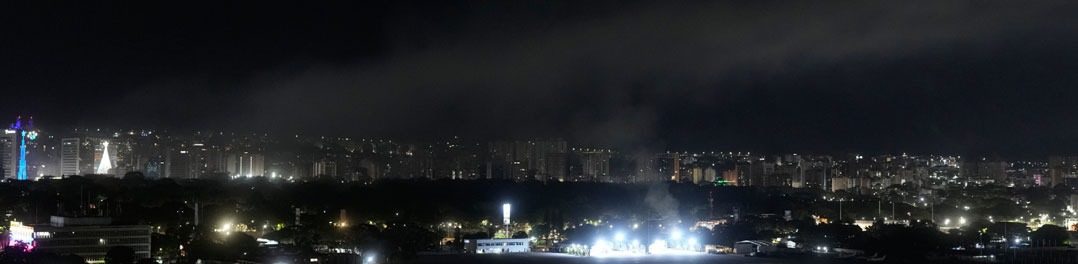
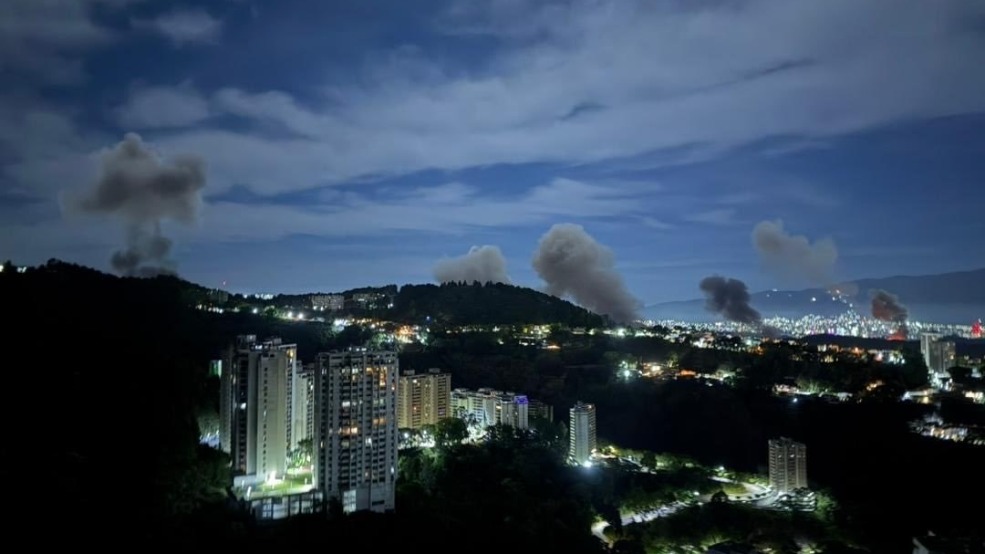
US attack against Venezuela left 100 dead, Venezuela's interior ministry said.
US European Command said it has seized an empty oil tanker linked with Venezuela and registered as a Russian vessel in the North Atlantic in an operation.
Large numbers of Americans took to the streets across the country over the weekend to stage mass protests against US actions targeting Venezuela. Protestors said "Bombing Venezuela is a crime" and shouted "US hands off foreign soil". (Reporter: Bilin Lin)



CARACAS -- Venezuelan Foreign Minister Yvan Gil said Thursday on social media that Venezuela reaffirms its commitment to deepening economic and trade agreements with China.
"Venezuela reaffirms its commitment to deepening trade and economic agreements with the People's Republic of China," Gil posted on Telegram.
He emphasized that the bilateral relationship "is supported by the framework of international laws and regulations of both sovereign countries."
The Bolivarian government expresses its "sincere gratitude" to the Chinese government for its support and solidarity in the face of the recent US strikes on Venezuela, the minister added.

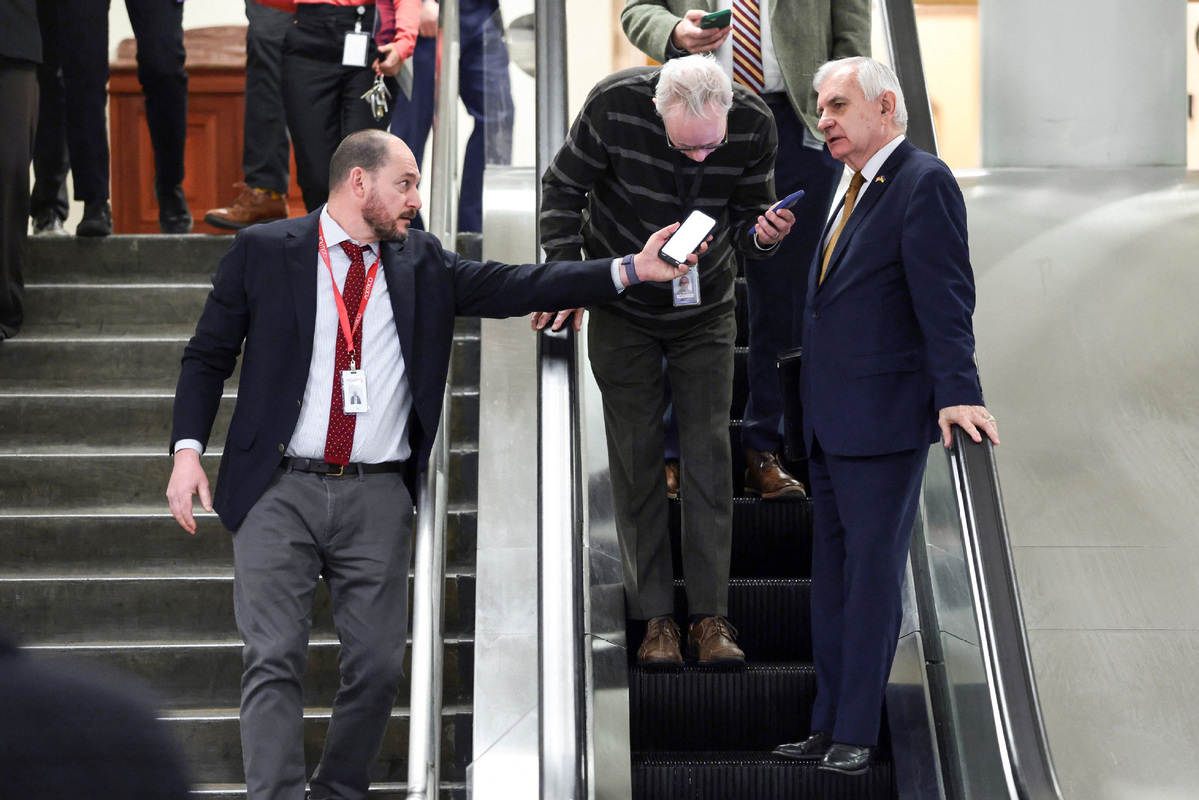
WASHINGTON -- The US Senate on Thursday advanced a resolution aimed at limiting US President Donald Trump's ability to take further military action against Venezuela.
The move came days after the Trump administration launched a large-scale military strike in Venezuela on Jan 3, taking by force the oil-rich South American country's President Nicolas Maduro and his wife, before putting them in custody in New York, drawing worldwide condemnation and concern.
The vote was 52 to 47, with five Republican senators joining all Democrats in support of the measure.
A Senate floor vote is expected to approve the resolution next week.
The measure would require "the removal of United States Armed Forces from hostilities within or against Venezuela that have not been authorized by Congress."
Tim Kaine, a Democrat from Virginia, introduced the resolution last month after the Trump administration reportedly killed two people who survived the initial US boat strike in the Caribbean on Sept 2, 2025.
The legislation was co-sponsored by Republican Senator Rand Paul, Senate Minority Leader Chuck Schumer and Democratic Senator Adam Schiff.
"The indication from the administration (is) that this is not a few days or a few weeks, it's likely a few years of US occupation and involvement in this country," Kaine said Wednesday on the Senate floor.
"This is not an arrest warrant. This is far bigger than that," said the Democratic senator, referring to the US raid to take Maduro by force.
"I think bombing a capital and removing the head of state is by all definitions, war," said Paul, the resolution's lone Republican co-sponsor, on Tuesday.
However, many Republican lawmakers defended the Trump administration's military action, though the White House had neither informed Congress in advance nor tried to seek approval from Congress, arguing that the boat strikes and the raid on Maduro were well within the president's constitutional authority.
Senate Democrats failed to advance two similar attempts last year.

WASHINGTON -- The United States expects to run Venezuela and extract oil from its vast reserves for years, US President Donald Trump on Wednesday evening told The New York Times.
"We're going to be using oil, and we're going to be taking oil," said Trump in an interview with the US media.

Fear and uncertainty hung over Venezuela's capital of Caracas on Monday, two days after United States forces seized President Nicolas Maduro in a nighttime operation that supporters of the government have denounced as an attack on the country's sovereignty.
"I don't think anyone slept on Saturday. I kept the shop closed until Sunday because we were afraid, and we still are," Norell Ramirez, a Caracas kiosk owner, told China Daily. "There's fear because we don't know what might happen. They bombed in the early morning. There are dead people."
Accurate casualty figures have yet to be released, but various preliminary estimates suggest that about 80 people were killed, including civilians and security personnel. Cuba said 32 of its citizens working in Venezuela were killed.
Ramirez said the confusion on the ground in Caracas has been fueled by conflicting messages from Washington and the local government.
"Even though everything is calm now, we don't know what might happen because (US President Donald) Trump says one thing, and the government here says another," said Ramirez. "And you don't know what to do, what to think."
"My fear is that a war will start. Life goes on, but there's a strange calm, because not everything is calm. From here, inside Venezuela, you can feel a lot of tension, a lot of uncertainty."
On the streets, anxiety mingled with a sense of suspended normalcy. Some stores remained closed, while others cautiously reopened on Monday. Although public transportation continued operating, many residents stayed home, following updates on their phones and watching state television.
"It's a very strange feeling," Maria Antonieta Peralta, a nurse in Caracas, told China Daily. She described shortages of medicine and supplies, as well as widespread apprehension about what comes next.
"I'm feeling very uncertain, a mix of fear and trying to figure out the best path forward for our country," said Peralta. "Uncertain because I have to pretend nothing is wrong and carry on with my normal daily life, praying that Trump doesn't decide to treat us like a colony.
"We don't want to be a colony, and he (Trump) doesn't come here to impose his rules," Peralta said. "Nobody asked him for help. We asked Latin America and the whole world for help. … It's very hard being here, living like this today."
Jose Camacho, another Caracas resident, said he opposed the US move.
"I'm angry because I managed to get ahead under both (President Hugo) Chavez and Maduro. I have my job, a house and my car," Camacho told China Daily. "And while I know it's not easy for everyone, there have lately been fewer power outages, fewer problems getting things."
Camacho argued that the US operation stripped Venezuelans of agency.
"Now the US is getting involved, and we're forced to do what they say. I don't think it's fair," he said."Nobody asked Trump for help. He came, bombed, killed people and left."
The writer is a freelance journalist for China Daily.

CARACAS - Venezuela's state-owned oil company Petroleos de Venezuela S.A. said Wednesday it is holding bilateral trade negotiations with the United States for the sale of crude oil.
In a statement posted on its Telegram channel, the oil company said the two sides are discussing "the sale of oil volumes," and that the process is being carried out using "similar schemes to those currently in place with international companies, such as Chevron."
The announcement came a day after US President Donald Trump said Venezuela would supply the United States with high-quality oil.
The United States launched a large-scale military operation against Venezuela in the early hours of Jan 3, taking by force Venezuelan President Nicolas Maduro and his wife, before putting them in custody in New York.
The United States has been widely bashed and protested following the military strike on Venezuela, which many view as an unlawful action primarily driven by a desire to control the South American country's vast oil reserves.

CARACAS — Venezuela's acting president Delcy Rodriguez insisted on Tuesday that no foreign power was governing her country, even as US President Donald Trump announced that Caracas will swiftly turn over millions of barrels of oil to the United States.
"The government of Venezuela is in charge in our country, and no one else," Rodriguez said three days after US forces forcibly seized President Nicolas Maduro and his wife in a stunning raid in Caracas.
"There is no foreign agent governing Venezuela," she said.
Trump insists that Washington is now "in charge" of the Caribbean country but has said he is prepared to work with Rodriguez — provided she submits to his demand for access to Venezuela's vast oil reserves.
The US leader was startlingly direct about his intent regarding Venezuela's reserves, announcing on his Truth Social platform on Tuesday that Rodriguez "will be turning over between 30 and 50 million barrels of high quality, sanctioned oil" to the US.
"This oil will be sold at its market price, and that money will be controlled by me" as president, Trump said, adding that he has tasked Energy Secretary Chris Wright with "immediately" executing the plan.
Trump has also suggested the US would help rebuild Venezuela's oil infrastructure to benefit oil majors such as Exxon Mobil and Conoco-Phillips, which were affected by Venezuelan oil nationalization by former president Hugo Chavez, and Chevron Corp, which has continued to operate there.
US oil chief executives are expected to visit the White House as early as Thursday to discuss investments in Venezuela, according to three sources familiar with the planning, Reuters reported.
With oil trading at roughly $56 a barrel, the transaction Trump announced on Tuesday could be worth as much as $2.8 billion. The US consumes roughly 20 million barrels of oil and related products a day, so Venezuela's transfer would be equivalent to as much as two and a half days of supply, according to the US Energy Information Administration.
In Caracas, Rodriguez said Venezuelans "remain steadfast" in their bid to defend the nation.
"We are a people that does not surrender, we are a people that does not give up," she said, paying tribute to the "martyrs" of the US attacks.
The country is holding seven days of mourning for those killed, she said.
Demonstrations will be held across the country to demand the release of the presidential couple from US custody, she said.
Despite the assault on Venezuela, the country continues to fulfill its production, supply and export cycle, she added.
In its first confirmation of losses, Venezuela's military published on Tuesday a list of 23 troops, including five generals, killed in the US strikes.
Cuba's government separately issued a list of 32 dead Cuban military personnel, many of whom were members of Maduro's security detail.
Venezuela has not yet confirmed the number of civilian casualties. Attorney-General Tarek William Saab spoke on Tuesday of "dozens" of civilian and military dead, without giving a breakdown.
Also on Tuesday, Rodriguez picked Gustavo Gonzalez Lopez as the new commander of the Presidential Honor Guard and director of the General Directorate of Military Counterintelligence, replacing Javier Marcano Tabata.
She appointed Calixto Ortega Sanchez, who led Venezuela's central bank from 2018 to 2025, to her Cabinet's top economic post.
Meanwhile, thousands of supporters of the presidential couple, including Interior Minister Diosdado Cabello, marched through Caracas demanding their release.
Maduro and his wife Cilia Flores appeared in court on Monday in New York, pleading not guilty to drug trafficking and other charges.
Agencies - Xinhua

CARACAS -- The US attack against Venezuela has left 100 dead, Venezuela's interior ministry said Wednesday.
Venezuelan President Nicolas Maduro and his wife, Cilia Flores, both suffered injuries during the raid, said Interior Minister Diosdado Cabello.
On a program of a state television, Cabello paid tribute to President Maduro and his wife, as well as those who died in the US military operation.
He also condemned the US military attack on the South American nation as barbaric and despicable, harming a large number of innocent people.
The minister described the attack as inhuman and said it was a truth that could not be concealed.
Maduro and his wife were kidnapped in a large-scale US military operation against Venezuela early Saturday and flown to New York.
BOGOTA -- Colombian President Gustavo Petro on Wednesday afternoon spoke with US President Donald Trump on the phone, said the local media, citing sources from the Colombian Foreign Ministry.
Trump has recently made multiple threats against Petro.

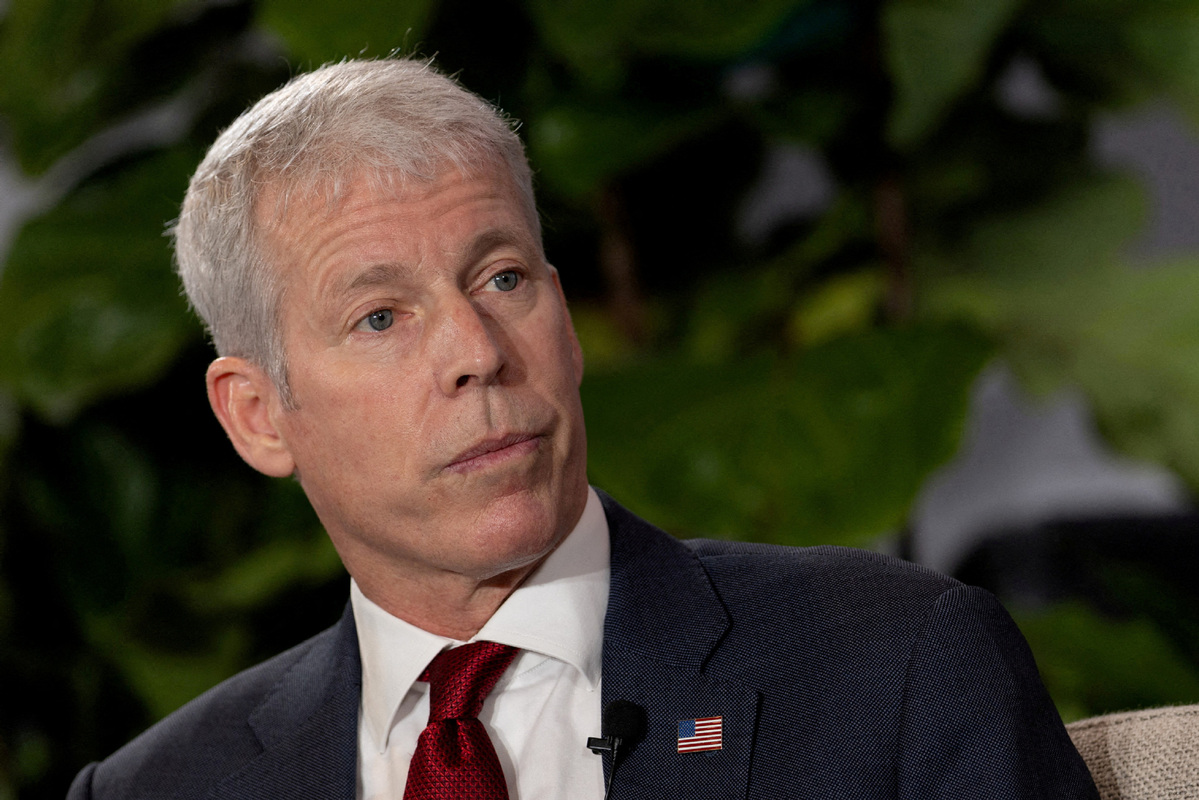
NEW YORK - US Energy Secretary Chris Wright said Wednesday that the United States will not only market stored oil in Venezuela but also control the sales of oil output from the country indefinitely.
At an industry conference in Miami, Florida, Wright said: "We're going to market the crude coming out of Venezuela, first this backed up, stored oil, and then indefinitely, going forward, we will sell the production that comes out of Venezuela into the marketplace," according to media reports.
The sales will be "done by the US government and deposited into accounts controlled by the US government," Wright said.
Wright added that the proceeds from oil then can flow back into Venezuela to benefit local people while the United States needs to have the leverage and control of oil sales to drive changes that must happen in Venezuela.
The Trump administration is in "active dialogue" with Venezuela's leaders, as well as US oil companies, according to Wright.
Venezuelan authorities "will be turning over" between 30 million and 50 million barrels of sanctioned oil to the United States, said US President Donald Trump on Tuesday.
The United States has been widely bashed and protested following the large-scale military strike on Venezuela, which many view as an unlawful action primarily driven by a desire to control the South American country's vast oil reserves.

CARACAS -- A demonstration was held in the Venezuelan capital of Caracas on Wednesday, calling for the defense of national sovereignty and demanding that the US government release Venezuelan President Nicolas Maduro and his wife.
Nahum Fernandez, head of the government of Caracas, called for unity to confront the anti-government campaigns promoted by the national and international opposition.
"There is no doubt here, what we must have here is revolutionary unity, what we must have here is the mobilization of a united people," he said.
Participants marched from Ali Primera Park in the west of the capital to Plaza O'Leary in the downtown area.
Angel Prado, Venezuelan minister of communes, social movements and urban agriculture, said: "We want to tell the world that in Venezuela, the power of the people rules. In Venezuela, Maduro rules ... and if Chavismo doesn't rule here, nobody rules here."
Prado expressed his support for the acting president, Delcy Rodriguez, saying that she was carrying out Maduro's instruction "not to let the government fall."
Jorge Arreaza, rector of the National University of Communes, said Venezuelans were ready and organized thanks to the policies implemented by the head of state.
"President Maduro prepared us for this," he said, calling on protesters to have faith in their leaders and to ignore rumors and misinformation.
The acting president faces "a tough dialogue process" amid further threats of military attacks by the United States, he said.
Since the US military operation of kidnapping Maduro and his wife, killing dozens and damaging telecommunications, health, residential infrastructure, Venezuelans have been demonstrating in support of Maduro.


Editor's note: Jeffrey D. Sachs, a professor at Columbia University, delivered a statement to the United Nations Security Council on Jan 5, 2026, regarding the situation in Venezuela. The US strikes on Venezuela and illegal "capture" of Venezuelan President Nicolás Maduro and his wife are endangering UN charter and world order. The original statement has been slightly edited for publication in China Daily. Excerpt from the statement follows:
The issue today is not the character of the government of Venezuela. The issue is whether any member state — by force, coercion, or economic strangulation — has the right to determine Venezuela's political future or to exercise control over its affairs.
This question goes directly to Article 2 (4) of the United Nations Charter, which prohibits the threat or use of force against the territorial integrity or political independence of any state. The Security Council must decide whether that prohibition is to be upheld or abandoned. Abandoning it would carry consequences of the gravest kind.
Since 1947, the United States foreign policy has repeatedly employed force, covert action and political manipulation to bring about regime changes in other countries. In her book Covert Regime Change (2018), political scientist Lindsey O'Rourke documents 70 regime-change operations attempted by the US between 1947 and 1989 alone.
These practices did not end with the Cold War. Since 1989, major US regime-change operations undertaken without authorization by the Security Council have included Iraq in 2003,Libya in 2011, Syria from 2011, Honduras in 2009, Ukraine in 2014 and Venezuela from 2002 onward.
The methods employed include open warfare, covert intelligence operations, instigation of unrest, support for armed groups, manipulation of mass and social media, bribery of military and civilian officials, targeted assassinations, false-flag operations and economic warfare aimed at collapsing civilian life. These measures are illegal under the UN Charter, and they typically result in violence, lethal conflict, political instability and deep suffering of the civilian population.
The US efforts for regime change in Venezuela span two decades. In April 2002, the US approved an attempted coup against the Venezuelan government. In the 2010s, the US funded civil society groups engaged in anti-government protests. When the government cracked down, the US imposed sanctions. In 2015, US president Barack Obama declared Venezuela to be "an unusual and extraordinary threat to the national security and foreign policy of the US".
In 2017, on the margins of the UN General Assembly, US President Donald Trump openly discussed the option of invading Venezuela to overthrow the government. From 2017 to 2020, the US imposed sweeping sanctions on Venezuela's state oil company. Between 2016 and 2020, oil production fell by 75 percent, and real GDP per capita (PPP) declined by 62 percent.
The UN General Assembly has repeatedly voted overwhelmingly against such unilateral coercive measures. Under international law, only the Security Council has the authority to impose such sanctions.
On Jan 23, 2019, the US unilaterally recognized Juan Guaidó as "interim president" of Venezuela. Five days later, on Jan 28, 2019, it froze approximately $7 billion of Venezuelan sovereign assets held abroad and gave Guaidó authority over certain assets.
In the past year, the US has carried out bombing operations in seven countries, none of which were authorized by the Security Council or undertaken in lawful self-defense under the Charter. The targeted countries include Iran, Iraq, Nigeria, Somalia, Syria, Yemen and now Venezuela. In the past month, Trump has issued direct threats against at least six UN member states, including Colombia, Denmark, Iran, Mexico, Nigeria and, of course, Venezuela.
Members of the Security Council are not called upon to judge Nicolás Maduro or assess whether the recent US attack and ongoing naval quarantine of Venezuela result in freedom or in subjugation. They are called upon to defend international law, and specifically the UN Charter.
The realist school of international relations accurately describes the condition of international anarchy as "the tragedy of great power politics". Its conclusion is that international anarchy leads to tragedy. In the aftermath of World War I, the League of Nations was created to end the tragedy through the application of international law. Yet the world's leading nations failed to defend international law in the 1930s, leading to another global war.
The UN emerged from that catastrophe as humanity's second great effort to place international law above anarchy. In the words of the Charter, the UN was created "to save succeeding generations from the scourge of war, which twice in our lifetime has brought untold sorrow to mankind."
Given that we are in the nuclear age, failure cannot be repeated. Humanity would perish. There would be no third chance.
To fulfill its responsibilities under the Charter, the Security Council should immediately affirm that the US shall immediately cease and desist from all explicit and implicit threats or use of force against Venezuela. It shall terminate its naval quarantine and all related coercive military measures undertaken without authorization by the Security Council. The US shall immediately withdraw its military forces from within and along the perimeter of Venezuela. The UN Secretary-General shall immediately appoint a Special Envoy, mandated to engage relevant Venezuelan and international stakeholders and to report back to the Security Council within 14 days with recommendations consistent with the UN Charter. All member states shall refrain from unilateral threats, coercive measures or armed actions undertaken outside the authority of the Security Council, in strict conformity with the Charter.
Peace and the survival of humanity depend on whether the UN Charter remains a living instrument of international law or is allowed to wither into irrelevance. That is the choice before the world today.
The views don't necessarily represent those of China Daily.
If you have a specific expertise, or would like to share your thought about our stories, then send us your writings at opinion@chinadaily.com.cn, and comment@chinadaily.com.cn.

UNITED NATIONS -- UN Secretary-General Antonio Guterres on Wednesday expressed the availability of his good offices to support a possible inclusive national dialogue in Venezuela, his spokesperson said.
Speaking to reporters at a daily briefing, spokesperson Stephane Dujarric said the UN chief had just concluded a meeting with Venezuelan UN ambassador Samuel Moncada, which lasted about 45 minutes.
"During the meeting, the secretary-general reiterated his publicly-stated position on the US military action in Venezuela," said Dujarric.
In remarks to the UN Security Council on Monday, delivered on his behalf by Under-Secretary-General for Political Affairs Rosemary DiCarlo, Guterres said he was "deeply concerned about the possible intensification of instability in the country, the potential impact on the region, and the precedent it may set for how relations between and among states are conducted."
"I remain deeply concerned that rules of international law have not been respected with regard to the Jan 3 military action," said the UN chief, who also called on all Venezuelan actors to engage in an inclusive, democratic dialogue in which all sectors of society can determine their future.
In the early hours of Jan 3, US military forces carried out a series of strikes on Venezuela, taking by force Venezuelan President Nicolas Maduro and his wife, before putting them in custody in New York, which sparked widespread condemnation.


The White House has said United States President Donald Trump is weighing "a range of options" to acquire Greenland, including possible military action, as tensions rise and Copenhagen, Nuuk, and European leaders warned that decisions about the island rest with Denmark and Greenland alone.
A joint statement on Tuesday by European leaders, warned the president to back off, saying: "Greenland belongs to its people. It is for Denmark and Greenland, and them only, to decide on matters concerning Denmark and Greenland."
The White House stated on Tuesday that Trump views acquiring Greenland as "a national security priority", adding that military force is "always an option". The president sees acquiring Greenland as necessary to "deter our adversaries in the Arctic region", it added.
"The president and his team are discussing a range of options to pursue this important foreign policy goal, and, of course, utilizing the US military is always an option at the commander-in-chief's disposal," the White House said.
Trump's interest in Greenland, first floated in 2019, reemerged this week after the Jan 3 US operation in Caracas that seized Venezuela's President Nicolas Maduro, intensifying tensions in Europe.
On Wednesday, France's Foreign Minister Jean Noel Barrot said the idea of one NATO member attacking another was inconceivable, dismissing talk of a US military move against Greenland as "nonsense".
He said US Secretary of State Marco Rubio had assured him Washington would not carry out a military operation to seize Greenland.
"He ruled out the possibility of what just happened in Venezuela happening in Greenland," Barrot told France Inter radio.
Barrot said France, Germany, and other allies are coordinating plans for how to respond if the US does attempt to take control of Greenland.
"Whatever form the intimidation takes and whatever its origin, we have begun work … to prepare ourselves to retaliate, to respond, and not to respond alone," Barrot said.
Members of US Congress, including Trump's fellow Republicans, have also criticized the US administration's stance on Greenland, noting Denmark is a loyal US ally.
"When Denmark and Greenland make it clear that Greenland is not for sale, the United States must honor its treaty obligations and respect the sovereignty and territorial integrity of the Kingdom of Denmark," Democratic Senator Jeanne Shaheen and Republican Senator Thom Tillis, co-chairs of the Senate NATO Observer Group, said in a statement.
The Reuters news agency, citing a senior US official, reported that Trump aims to bring the strategically vital, mineral-rich Danish territory under US control within three years, before his second term ends.
The official, who requested anonymity, said options range from buying Greenland from Denmark, which was an effort Trump pursued during his first term, to negotiating a Compact of Free Association with the territory, which would stop short of making the island part of the United States.
"Diplomacy is always the president's first option with anything, and deal-making. He loves deals, so if a good deal can be struck to acquire Greenland, that would definitely be his first instinct," the official said.

LONDON -- The British Ministry of Defence (MoD) said on Wednesday that British forces assisted a US-led operation against the tanker Marinera, also known as Bella 1, in the North Atlantic at Washington's request, reported local media.
The British Armed Forces provided "pre-planned operational assistance, including basing support, to US military assets operating in the UK-Iceland-Greenland gap," Sky News reported, citing a statement from the ministry.
Earlier on Wednesday, US European Command said it had seized an oil tanker in the North Atlantic during an operation. The vessel is reportedly linked to Venezuela and registered as a Russian tanker.
Russia has condemned the US action and demanded that the United States ensure the humane treatment of Russian citizens aboard the seized vessel, TASS reported, citing the Russian Foreign Ministry.
MOSCOW -- Moscow on Wednesday condemned the United States for seizing a Russian-flagged tanker in the North Atlantic, following a pursuit that began off the coast of Venezuela.
"In accordance with the 1982 UN Convention on the Law of the Sea, freedom of navigation applies in waters on the high seas, and no state has the right to use force against vessels duly registered under the jurisdiction of other states," Russia's Ministry of Transport said in a statement.
Trump confirms considering using US military to take control of Greenland on 'national security concerns'

WASHINGTON -- US European Command said it has seized an empty oil tanker linked with Venezuela and registered as a Russian vessel in the North Atlantic in an operation on Wednesday.
"The @TheJusticeDept & @DHSgov, in coordination with the @DeptofWar today announced the seizure of the M/V Bella 1 for violations of US sanctions. The vessel was seized in the North Atlantic pursuant to a warrant issued by a US federal court after being tracked by USCGC Munro," said the Command in a post on social media X.
The seizure of the oil tanker Marinera, formerly known as Bella-1, which has been under the US sanctions targeting Iran, was made after an active pursuit since late December by US forces, according to CBS News and other US media reports.
It was the third oil tanker intercepted by the United States since last month.
Russian military vessels were in the area as the US operation unfolded Wednesday, according to media reports.
USCGC (the United States Coast Guard Cutter) Munro mentioned in the Command's post is a Legend-class National Security Cutter designed for long-range, high-end missions. It is one of the largest ships in the US Coast Guard fleet.
US P-8 surveillance aircraft, deployed in Suffolk, England, had surveilled the tanker for days ahead of its seizure, according to US media outlets, citing open-source flight data.
The oil tanker was in the Caribbean and apparently headed to Venezuela to load cargo when it was chased by the US Coast Guard about two and a half weeks ago. It then retreated into the Atlantic Ocean.
On Dec 31, it was listed by the Russian Maritime Register of Shipping as a Russian vessel with the new name of Marinera. The ship's crew also painted a Russian flag on the ship's side.
Russia reportedly filed a formal diplomatic request last month demanding that the United States stop attempts to seize the tanker.
US President Donald Trump ordered a "full and total blockade" of all sanctioned tankers entering or leaving Venezuela last month.
On Dec 10, US forces seized the oil tanker Skipper near Venezuelan waters and announced the US plans to keep its oil cargo.
On Dec 20, the US Coast Guard boarded the Centuries off Venezuela, a Panamanian-flagged supertanker that was not on Washington's sanctions list. White House spokesperson Anna Kelly said on X that the crude oil aboard the Centuries originated from Venezuela's state-owned oil company PDVSA, which is under US sanctions.

US conducting operation to seize Venezuela-linked oil tanker in Atlantic: US media
Anti-war campaigners gathered outside 10 Downing Street, the working home of the UK’s prime minister, in London on Monday to protest against US military action against Venezuela. Organizers said around 2,000 people took part.
The protesters warned that the intervention set a dangerous precedent. “If we don’t stop, this can happen in any part of the world, and no one is safe from this criminal act,” said Belgica Guana Cole, an Ecuadorian protester.
Reporter: Zheng Wanyin
Wang Jingli and Gao Kejing contributed to the story.







