
The China Story
at your Fingertips
OPEN

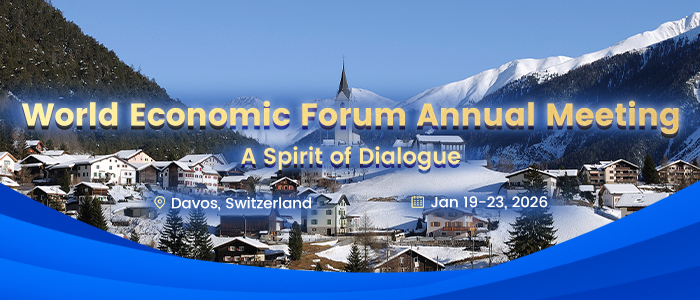
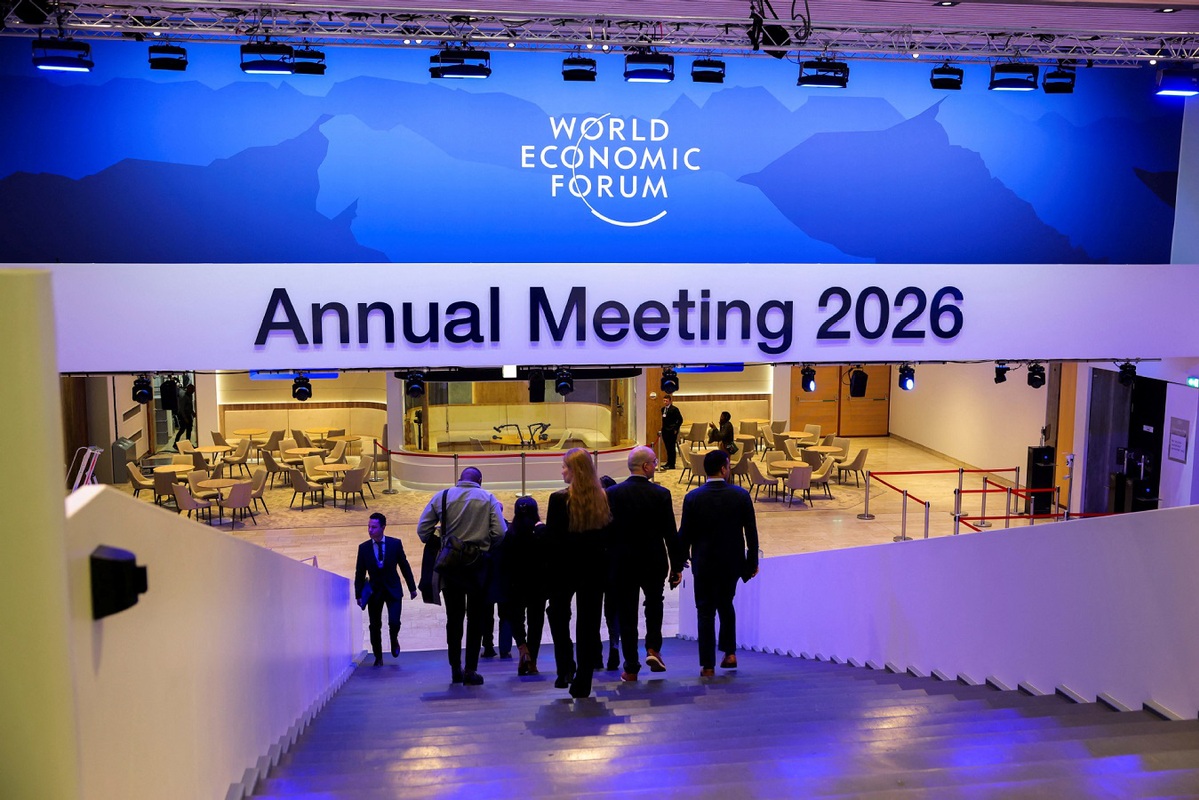
Amid growing geopolitical uncertainty, leaders of governments, businesses, civil society and academia will convene in Davos, Switzerland, for the five-day annual meeting of the World Economic Forum starting on Monday, to engage in forward-looking discussions to address global issues and find a stabilizer for the world economy.
The Davos forum comes at a time when the United States has threatened to impose additional 10 percent tariffs on eight European ally countries that have opposed its pronounced aim to annex Greenland, a self-governing territory of Denmark, by means that do not exclude the use of military force.
The US and the European Union share the largest bilateral trade and investment relationship. Together, they represent almost 30 percent of global trade in goods and services and over 40 percent of global GDP.
Experts said the proposed tariffs, if implemented, would exert tremendous pressure on European nations, slowing down the global economic recovery, and further drive protectionism and unilateralism.
According to US President Donald Trump, the latest round of tariffs will take effect on Feb 1 on goods imported from Denmark, Finland, France, Germany, the Netherlands, Norway, Sweden and the United Kingdom.
If no deal is reached on the "complete and total purchase" of Greenland, the tariff rate would rise to 25 percent on June 1, Trump said.
European nations, some of which already voiced their opposition to last year's trade deal with the US, calling it "unbalanced" and detrimental to their economies, have once again made their dissatisfaction known.
UK Prime Minister Keir Starmer described the tariff move as "completely wrong", while French President Emmanuel Macron called it "unacceptable".
On Sunday, the EU convened an emergency meeting for coordination of responses.
On Wednesday, Trump is scheduled to address the Davos forum. This year's forum is themed "A Spirit of Dialogue" to emphasize cooperation amid intensifying global fragmentation.
Chinese Vice-Premier He Lifeng will attend the forum together with around 65 state and government leaders and around 850 top business executives. He is scheduled to deliver a special speech on Tuesday.
According to the Foreign Ministry, during the forum, China will seek to advance its ideals of practicing true multilateralism, jointly building an open world economy, striving for global development that is more inclusive, resilient and beneficial for all, and injecting more stability and positive energy into the world economy.
China's role at this year's forum is a hot topic globally. Heather Stewart and Dan Sabbagh, editors of The Guardian newspaper, wrote in an article published on Sunday,"Though American power is significant, China and other developing countries continue to grow as a share of the global economy, meaning the long-term balance is slowly tipping away from the US."
Sheikh Tanjeb Islam, who heads the World Economic Forum's event editorial team, said in an interview with financial media outlet Yicai that China continues to attract growing attention from participants with regard to its economic performance, innovation ecosystem and structural transformation.

BRUSSELS -- The European Union is considering hitting Washington with 93 billion euros ($107.68 billion) worth of tariffs or restricting American companies from the bloc's market, in response to US President Donald Trump's tariff threats over Greenland, according to Financial Times.
Citing officials involved in the preparations, the Financial Times said the retaliatory measures are being drafted to give European leaders leverage ahead of pivotal meetings with Trump at the World Economic Forum in Davos the following week.
The report said the EU had drawn up the tariff list since last year but kept it suspended until Feb 6 to avert a trade war. However, amid the escalation of the transatlantic rift over Greenland, representatives of EU members discussed reactivating it on Sunday, alongside talks about using the Anti-Coercion Instrument, which could curb US firms' access to the bloc's market.
The report came after the eight countries directly targeted by the US proposed tariffs — Denmark, Finland, France, Germany, the Netherlands, Norway, Sweden, and the United Kingdom — issued a joint statement on Sunday declaring "full solidarity" with Denmark and Greenland.
In a social media post on Saturday, Trump said the United States would levy a 10-percent tariff from Feb 1 on goods from the mentioned eight countries. He warned the rate would rise to 25 percent on June 1 and remain in place until a deal is reached for the "complete and total purchase" of Greenland.
Trump, due to attend the World Economic Forum on Wednesday and Thursday, is expected to hold private talks with European leaders, including European Commission President Ursula von der Leyen, and to join a meeting of Western countries backing Ukraine.
KIEV -- Ukrainian and US teams will hold another round of negotiations on Jan. 17 in Miami, Ukrainian Ambassador to the US Olga Stefanishyna announced on Friday.
The delegations are expected to refine agreements on security guarantees and Ukraine's economic prosperity, which could be signed at the World Economic Forum in Davos next week, according to Stefanishyna's post on X.
The Ukrainian delegation includes head of Ukraine's National Security and Defense Council Rustem Umerov, Presidential Office chief Kyrylo Budanov, and Chairman of the Servant of the People parliamentary faction David Arakhamia.
The latest round of negotiations between the Ukrainian and US delegations took place last month.
Vice-Premier He Lifeng will travel to Davos, Switzerland, from Jan 19 to 22 to attend the World Economic Forum Annual Meeting 2026 and pay a visit to Switzerland, Foreign Ministry announced on Friday.
He will deliver a speech at the opening plenary session of the forum's annual meeting, Foreign Ministry spokesman Guo Jiakun said on Friday at a daily news briefing.
According to Guo, the WEF annual meeting is an important platform for discussing global economic trends and promoting cooperation and development. At present, the world is confronted with mounting uncertainties and instability, while global economic growth remains weak.
China looks forward to working with all participants to strengthen dialogue and exchanges, build consensus on cooperation, practice genuine multilateralism, jointly foster an open world economy, and promote more inclusive, equitable and resilient global development, Guo said.
China stands ready to inject greater stability and positive momentum into the world economy, he added.
During his visit, He will meet with President of the Swiss Confederation and Head of the Federal Department of Economic Affairs, Education and Research, Guy Parmelin, Guo said.
This year marks the 10th anniversary of the establishment of the innovative strategic partnership between China and Switzerland and also the first year of China's 15th Five-Year Plan period (2026-30).
Guo said the visit is expected to help both sides further expand cooperation and advance the partnership with more mutually beneficial outcomes.
BEIJING -- Chinese Vice-Premier He Lifeng will attend the World Economic Forum Annual Meeting 2026 in Davos and visit Switzerland from Jan 19 to 22, a Chinese foreign ministry spokesperson announced on Friday.
He, also a member of the Political Bureau of the Communist Party of China Central Committee, is invited by the World Economic Forum and the government of the Swiss Confederation, the spokesperson said.
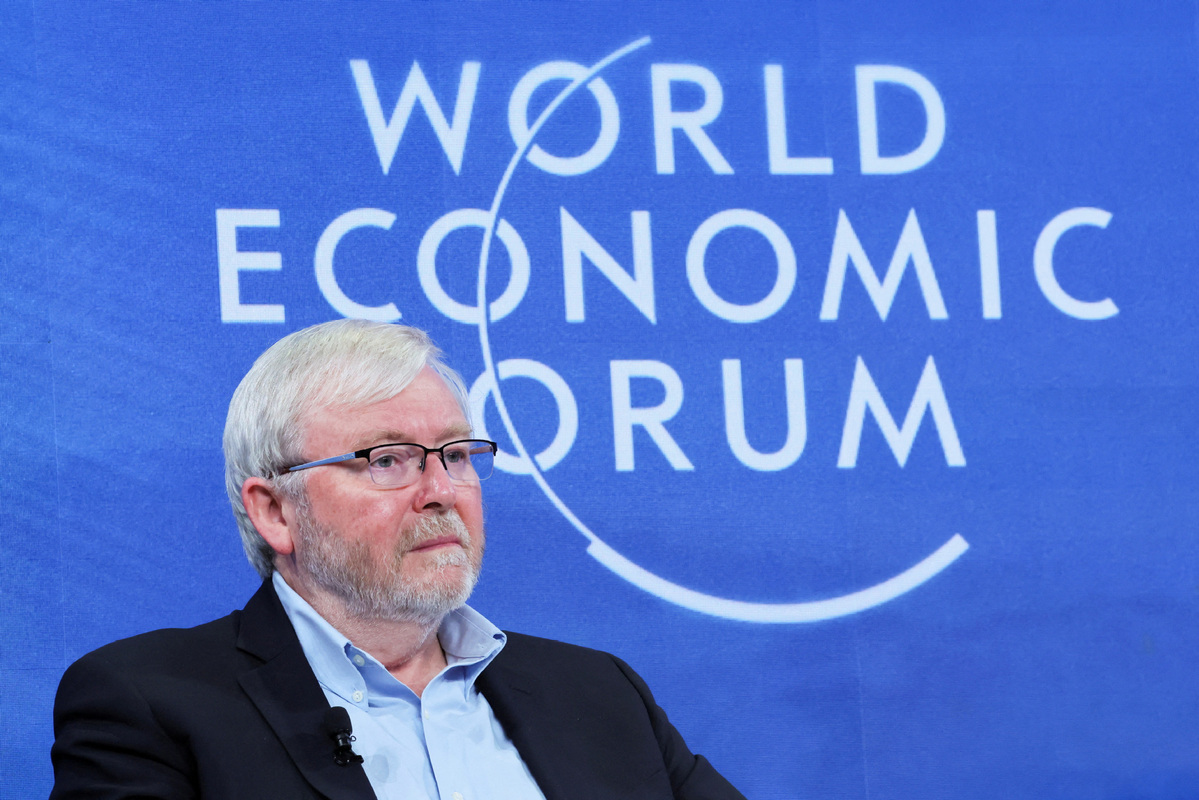
Australia's Ambassador to the United States Kevin Rudd will end his tenure a year earlier than scheduled, Prime Minister Anthony Albanese said on Tuesday.
Rudd, a former Australian prime minister and an expert on China, will assume the role as head of the US think tank Asia Society, where he is expected to contribute to fostering better relations between the West and China.
Albanese praised Rudd's contribution during his time in Washington and said the decision to leave the job early was made by Rudd himself.
"It is with deep appreciation for his tireless contribution to our national interests over the last three years in Washington that we today announce the Hon Dr Kevin Rudd AC will conclude his posting as Australia's Ambassador to the United States at the end of March 2026," Albanese said in a statement on Tuesday.
James Laurenceson, director of the Australia-China Relations Institute at the University of Technology Sydney, said the implications of Rudd's departure are limited.
"Rudd is widely regarded as an authoritative voice on China. It is unlikely that the next Australian ambassador (to the US) will bring similar credentials," he said.
"But these days any Australian ambassador in Washington ... has their hands full just trying to manage an increasingly disjointed Australia-US relationship."
Albanese said Rudd will take the role of global president of Asia Society, and will also head the think tank's Center for China Analysis.
This will mark Rudd's second stint leading the organization, which has focused on Asia-Pacific affairs since its founding in 1956.
Rudd served as prime minister from 2007 to 2010, and again in 2013. He previously served as an Australian diplomat in Beijing in 1984.
Albanese hailed Rudd as "one of the world's most eminent and sought-after experts on China and US-China relations".
Rudd said on Tuesday that his future work would focus on US-China ties.
"I will be remaining in America working between New York and Washington on the future of US-China relations, which I have always believed to be the core question for the future stability of our region and the world," he said.
"As a 'think and do' tank, Asia Society's formidable Center for China Analysis will be an important platform to that end."
Looking ahead, Laurenceson said Australia's approach to China and its management of the China-US-Australia relationship would remain broadly consistent.
"On China, the Albanese government's stance won't change — dialogue, diplomacy, trade and people-to-people exchanges will be prioritized, and the new Australian ambassador will urge the US to follow suit," he said.
"But equally, they will be charged with gaining US support for balancing China in the strategic realm," he said. "To that end, the new Australian ambassador will be working hard to facilitate progress on AUKUS and vulnerable supply chains, just as Kevin Rudd has been doing."
AUKUS is a trilateral security partnership formed in 2021 by Australia, the United Kingdom and the United States.
Past comments
The Australian Broadcasting Corporation said in a report that Rudd had in the past severely criticized Trump in a series of social media posts, including calling him "the most destructive president in history", "a traitor to the West" and a man who "drags America and democracy through the mud".
After Trump won the US presidential election in November 2024,Rudd deleted the comments.
This had been done "to eliminate the possibility of such comments being misconstrued as reflecting his positions as ambassador and, by extension, the views of the Australian government", a statement on his personal website said.
The Australian government said on Tuesday that an announcement regarding the country's new ambassador to the US will take place in due course.

LONDON -- Geoeconomic confrontation and societal risks are the leading short-term global threats in 2026, the World Economic Forum (WEF) warned in its Global Risks Report 2026 released on Wednesday ahead of its annual meeting in Davos, Switzerland.
The report ranks geoeconomic confrontation as the top risk for 2026, followed by interstate conflict, extreme weather, societal polarization, and misinformation and disinformation. It also identifies geoeconomic confrontation as the most severe risk over the next two years.
"We have entered a new age of competition, and that competition is shaping every other global risk," said Saadia Zahidi, managing director of the WEF, at a press conference.
Economic risks showed the largest increase in the two-year outlook, with concerns over economic downturns, inflation, rising debt and potential asset bubbles intensifying amid geoeconomic tensions, the report said.
Environmental risks remain the most severe overall, led by extreme weather, biodiversity loss and critical changes to Earth systems. The report noted that three-quarters of respondents expect a turbulent environmental outlook.
Risks related to adverse outcomes of artificial intelligence rose sharply, climbing from 30th in the two-year horizon to fifth in the 10-year outlook, reflecting concerns over impacts on labor markets, society and security.
The 21st edition of the report draws on views from more than 1,300 experts, policymakers and industry leaders. The WEF's annual meeting will be held in Davos from Jan. 19 to 23.

GENEVA - The United Nations General Assembly on Thursday elected former Iraqi President Barham Salih as the new UN High Commissioner for Refugees.
Salih, born in 1960, served as president of Iraq from 2018 to 2022. He previously held posts including deputy prime minister of Iraq and prime minister of the Kurdistan regional government.
He will take office on Jan. 1, 2026, to succeed Filippo Grandi as head of the Geneva-headquartered UN Refugee Agency (UNHCR), with a five-year term. Grandi assumed office as UN High Commissioner for Refugees in January 2016. His 10-year term will end on Dec. 31, 2025.
In a statement issued following his election, Salih said that at a time of record displacement and severe pressure on humanitarian resources, delivering on UNHCR's mandate requires a renewed focus on impact, accountability, and efficiency.
He said that UNHCR will build on the important reforms undertaken in recent years to strengthen operational effectiveness and value for money.

As the World Internet Conference takes place in Wuzhen, China is once again at the center of the global conversation about the future of connectivity. In just over a decade, this gathering — often described as the "Davos of the digital world" — has evolved from a national showcase into a global platform for technology governance, cybersecurity and artificial intelligence. Amid Wuzhen's ancient bridges and ultra-modern networks, the outlines of China's next digital era come into view: an era shaped by a vision grounded in cooperation rather than competition, and guided by the recommendations for the 15th Five-Year Plan (2026-30), which marks the beginning of a decisive phase in the country's economic and technological evolution.
China is not simply upgrading its economy; it is reprogramming it. It is shifting from the paradigm of mass production to one centered on creation, knowledge and the coordination of resources into a coherent design of modernization. The new five-year plan is not just an administrative road map but an effort to weave technology, sustainability and cooperation into the fabric of a new modernity that reconciles national ambition with global interdependence.
In this orchestration, the country acts as conductor rather than controller, aligning science, capital and talent toward a common goal. In an age when technology defines the hierarchy of power, China has chosen to embed innovation within a sense of shared responsibility, showing that progress and cooperation are not opposites, and that leadership must also inspire.
In a world too often fragmented by zero-sum logic, Beijing proposes a narrative of convergence. It is building platforms instead of walls, designing ecosystems instead of empires and seeking prosperity founded on balance rather than supremacy. It is rewriting the very grammar of globalization.
The new strategy rests on three pillars. The first is industrial resilience, understood as the ability to innovate within global networks while reducing systemic vulnerabilities and turning supply chains into learning streams in which machines, data and people evolve together. China is leading in advanced robotics, new materials and smart manufacturing, with millions of active invention patents and a growing share of global high-tech exports.
The second pillar is the construction of next-generation digital infrastructure, the invisible nervous system of the future economy. China is already testing 6G networks that will link terrestrial and satellite systems and pave the way for full commercial deployment around 2030. These distributed cloud-edge architectures aim to interconnect mobility, healthcare, and energy into a single dynamic organism in which every object becomes a node of intelligence.
The third pillar is the pursuit of frontier science — from quantum communication to synthetic biology and new energy materials. China is consolidating its global leadership and marking the transition from the "factory of the world "to the laboratory of the future, where knowledge itself becomes the new form of capital.
No place embodies this vision more vividly than Shenzhen, the living code of China's digital civilization and its most advanced window on the future. Shenzhen has become the operating system of innovation where intelligent factories synchronize production, logistics and energy in real time, while algorithms design circuits, robots design other robots and designers collaborate with code.
The convergence between digital innovation and ecological responsibility is perhaps the most distinctive feature of the new plan. It outlines an economy in which clean energy, hydrogen, electric mobility and circular production form an integrated, data-driven system where environmental sustainability is no longer a constraint but the very logic of growth. The philosophy underpinning this vision — the "dual circulation" — promotes domestic innovation while remaining open to the world and transforms interdependence from a source of fragility into a foundation of strength.
Delivering this vision requires more than capital and scale. China's enduring strength lies in its capacity for mobilization, the ability to translate long-term vision into coordinated execution, aligning public policy, private enterprise, and social purpose around shared technological missions. This coherence between intention and implementation is one of China's most decisive strategic advantages in the global arena.
For Europe, China's transformation represents not a threat but an invitation — a call to redefine partnership in the age of intelligence. Competition will intensify, but so will the space for constructive complementarity. Europe excels in regulation, precision and sustainability; China in speed, scale, and transformation. Between these two models lies the most promising frontier of our time: co-innovation, where difference becomes a resource and collaboration a multiplier of progress.
The green transition is the most fertile field for this cooperation. European companies contribute excellence in environmental engineering, hydrogen electrolysis and sustainable urban planning, while China brings manufacturing capacity, executional speed and continental-scale deployment. Joint projects such as the EU-China green industrial parks in Jiangsu and Guangdong or the Sino-European hydrogen corridors demonstrate that competitiveness and collaboration can coexist, turning diplomatic language into industrial reality and accelerating global decarbonization.
A second field of synergy is intelligent manufacturing, where Europe's heritage in automation and design meets China's agile engineering culture. Collaborative robotics, AI-based logistics, and circular industrial parks can become the new Silk Roads of the digital era. Even in the sensitive areas of data governance and AI ethics, dialogue remains essential: Europe's human-centric model and China's applied pragmatism are not opposites but complementary approaches to a fairer and safer digital civilization.
However, the most powerful engine of this transformation is not silicon; it is the human mind. Across China's innovation ecosystem — from Shenzhen to Shanghai, from Chengdu to Hangzhou — universities, startups and enterprises are building open laboratories in which talent defines competitiveness; knowledge flows freely as capital once did, and networks of minds replace the empires of trade. China-Europe joint research centers show how the next phase of globalization will not be written in treaties or tariffs but in shared code and scientific collaboration.
Balance and trust are essential to realize this potential. Europe must protect its strategic autonomy and safeguard critical technologies, yet closure would be more harmful. In a century governed by data and ideas, isolation doesn't lead to protection but paralysis. The alternative is mutual interdependence and recognizing that innovation flourishes when openness and diversity meet.
Ultimately, China's new five-year plan will be an attempt to unite technology and sustainability, innovation and cooperation, ambition and responsibility. It marks the country's transformation from a manufacturing China to a creative China, and perhaps from a competitive world to a civilization of collaboration, where technology connects rather than divides, leadership enables rather than dominates, and the most intelligent form of competition is the one that allows both sides to advance together.
The author is the president of ChinaEU, a Brussels-based association promoting China-Europe business cooperation in the digital area.
The views don't necessarily represent those of China Daily.
If you have a specific expertise, or would like to share your thought about our stories, then send us your writings at opinion@chinadaily.com.cn, and comment@chinadaily.com.cn.
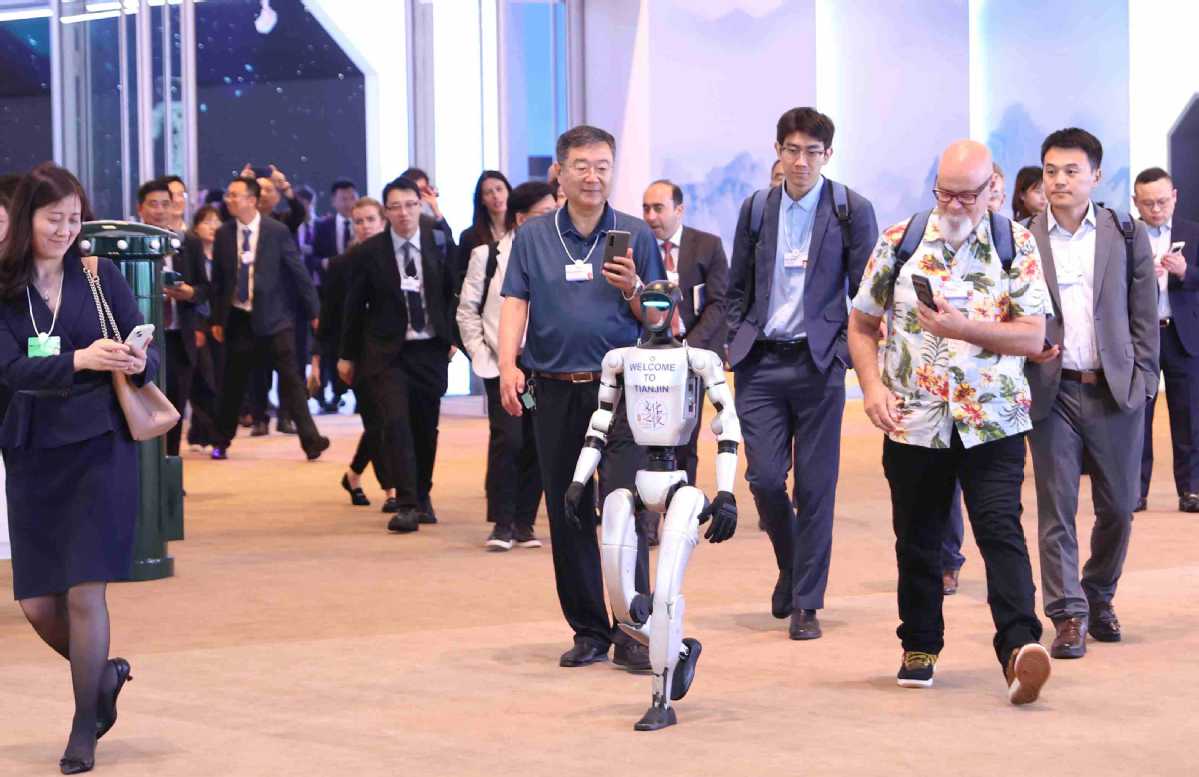
China's accelerated efforts to boost the application of fast-evolving artificial intelligence in a wide range of sectors will help the country gain a competitive edge in tech frontiers and create immense business opportunities for investors amid external uncertainties, said experts and entrepreneurs.
China, they said, is at the global forefront in the development and application of AI technology, which has become a vital force bolstering its economic development and industrial upgrades, as the country recognizes AI as an essential tool in fostering new quality productive forces and building up new growth drivers.
The country's super-large market, robust engineering talent pool and thriving innovation ecosystem will underpin its capacity to drive technologies from research labs into the industrial arena, they added.
Zhu Min, former deputy managing director of the International Monetary Fund, said China will make great strides in the use of AI technology in the next 18 months to two years, emphasizing that the country's large-scale manufacturing, vast consumer market of 1.4 billion people and abundant industrial application scenarios present unique advantages for the development of AI.
Zhu made the remarks during the 16th Annual Meeting of the New Champions, also known as the Summer Davos, in Tianjin last month. He said AI Plus will serve as an important driving force for China's economic growth.
China has surpassed the United States in the number of academic papers issued on AI, taking the top spot worldwide, Zhu said, adding that such papers increasingly focus on the specific industrial applications of AI.
Noting that Chinese AI startup DeepSeek had opened a broad space for AI deployment, he said China's services sector, technology and AI have huge growth potential, with future employment to take place in these emerging fields. It is highly significant in strengthening retraining in the job market and letting people know how best to use AI, he added.
Goldman Sachs analysts said breakthroughs in generative AI have the potential to bring about sweeping changes to the global economy. These breakthroughs could drive a 7 percent, or about $7 trillion, increase in global GDP and lift productivity growth by 1.5 percentage points over a 10-year period, they said.
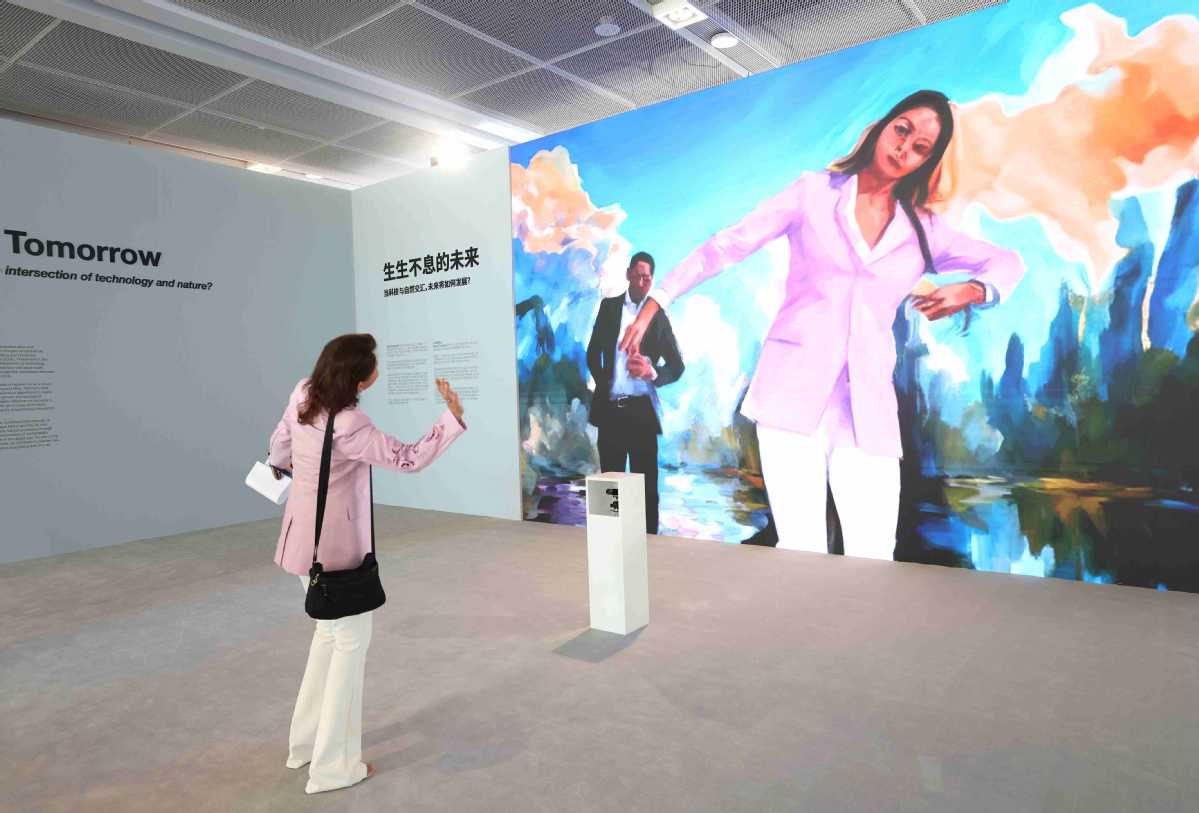
Under the AI Plus initiative, China will work to effectively combine digital technologies with its manufacturing and market strengths, according to this year's Government Work Report.
China will support the extensive application of large-scale AI models, and vigorously develop new-generation intelligent terminals and smart manufacturing equipment, the report said.
Li Haitao, dean of Cheung Kong Graduate School of Business in Beijing, said AI is profoundly reshaping the business landscape and is bound to transform various industries. Currently, China and the US have the greatest potential to lead in the next round of AI revolution, he noted.
According to Li, China boasts a large number of well-educated engineering talent and AI professionals, improved digital infrastructure such as 5G and computing networks, massive amounts of data, and ever-increasing innovation capabilities, which provide a solid foundation for the training and adoption of AI models.
The emergence of Chinese AI companies such as DeepSeek is due to the country's long-term and accumulated achievements in multiple leading fields, such as education, internet, 5G communication, digital payment, technological infrastructure and renewable energy, Li added.
China's AI sector will make big strides in the next 10 to 15 years, with its market size reaching 1.73 trillion yuan ($241 billion) by 2035, accounting for 30.6 percent of the global total, said market research company CCID Consulting.
"The recent wave of AI innovation, led by open-sourced large language models, is so encouraging that companies are quickly mobilizing themselves to harness such technologies," said Samantha Zhu, chairperson of Accenture Greater China.
She underscored that China is emerging as "an innovation-driven economy", with breakthroughs in areas like AI, robotics, renewable energy and electric vehicles, showcasing the country's growing capability in critical technologies that underpin long-term competitiveness.
The consultancy estimates that adopting a holistic approach to productivity, with generative AI acting as a multiplier, could boost productivity growth from 1.9 percent to 15.9 percent. It said China has one of the most vibrant AI ecosystems in the world, driven by a mix of enterprise adoption, tech startups and public-private partnerships.
To fully capitalize on the opportunities, multinational corporations should empower local teams to codevelop AI solutions with local partners, integrate AI into core operations and leverage China as a strategic launchpad for scalable innovation, it added.
Zhu emphasized that with more Chinese companies surveyed expecting their generative AI solutions to be adopted at scale within their organizations this year, there is strong momentum for AI-driven transformation as businesses quickly integrate it into decision-making, operations and customer engagement.
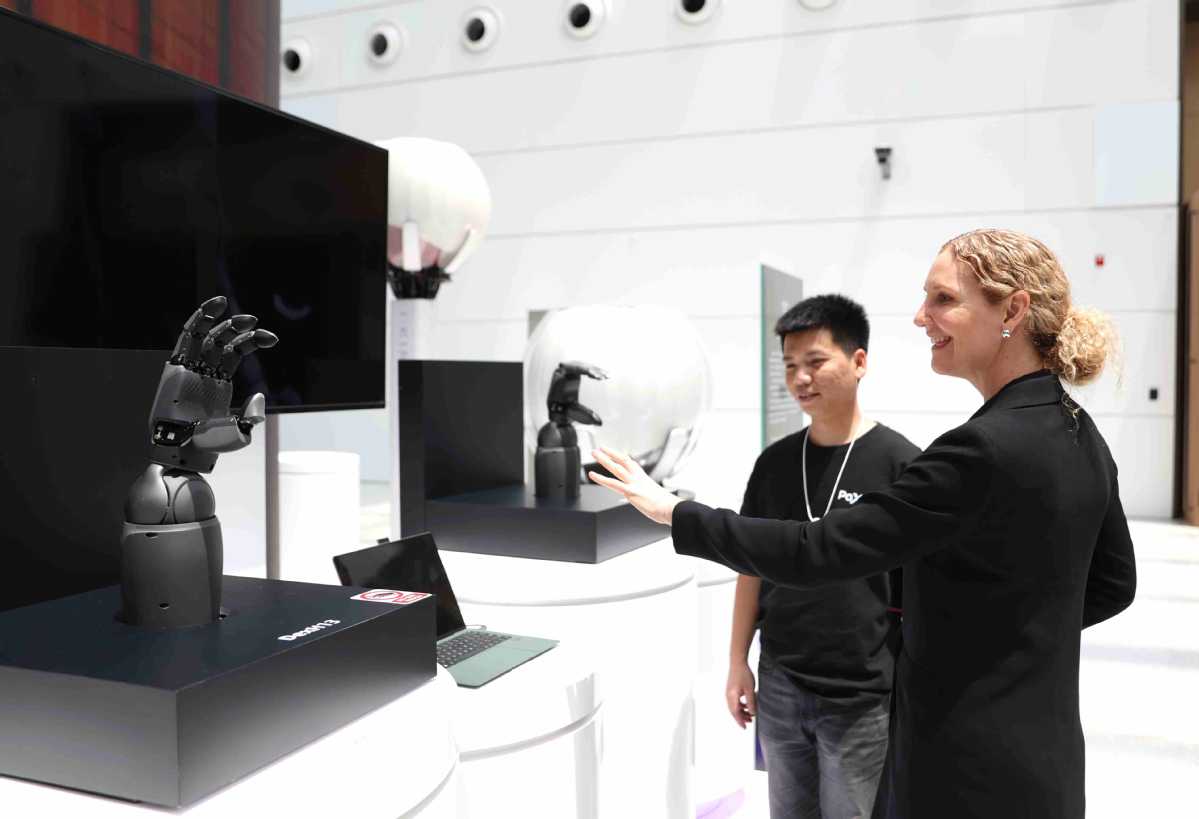
"Looking at the vibrant AI ecosystem, we can say that China is not just an AI market — it's a proving ground for AI adoption by enterprises at scale."
Zhu's views were echoed by Karel Eloot, senior partner of McKinsey & Company.
China, Eloot said, has good technological infrastructure in terms of digitalization and AI, and has developed a world-class business-to-consumer ecosystem, laying a strong foundation for further innovation.
"Chinese companies have been very open to experiment with new things so that they can learn very fast," Eloot said, adding that Chinese firms are at the forefront of digital analytics and technology transformation. He said generative AI is very important for the future development of "lighthouse factories", which represent the highest level of global intelligent manufacturing.
"The application of AI in the high-tech manufacturing sector will bring about greater value than its use in terminal products, as this cutting-edge digital technology will significantly improve the production efficiency and competitiveness of China's manufacturing enterprises," said Li Dongsheng, founder and chairman of Chinese consumer electronics maker TCL Technology Group Corp.
Li said AI technology is increasingly embedded into terminal devices, intelligent production lines and product research and development, and will bolster the development of China's high-tech manufacturing sector.
He emphasized that China's recent breakthroughs in large language models, along with the meteoric rise of domestic AI startup DeepSeek, have enabled it to rapidly catch up with the US in the AI domain, while surpassing most other developed economies in terms of AI application.
Zhou Yunjie, chairman and CEO of Chinese home appliances giant Haier Group, said AI is expected to be the biggest technological revolution in the next 50 years. "At present, the deployment of AI in enterprises mainly concentrates on manufacturing, research and development, sales, procurement and services.
"Every industry will integrate with AI, and any enterprise that does not embrace AI will eventually be weeded out," Zhou said.
Haier has invested heavily in developing LLMs and is promoting the adoption of AI across various fields, such as household appliances and industrial internet, he added.
As AI is transforming the world and data centers are leading the way, US-based smart building solutions provider Johnson Controls is promoting timely, efficient and sustainable data center deployments across countries.
"China's focus on digitalization and decarbonization aligns seamlessly with Johnson Controls' core expertise. We are well positioned to support China's advancement in driving new quality productive forces," said Anu Rathninde, president of Johnson Controls Asia-Pacific.
He said China's economy is propelled by new energy, digital transformation and some key industries like smart manufacturing and modern services, which create a large number of opportunities for sustainable innovation. "We look forward to growing our business even further."
Cui Jingyi, vice-president and general manager of industrial software developer Aveva China, said China is becoming the market with the most extensive application of AI technologies globally, bringing new opportunities for many companies including Aveva.
Cui said China demonstrates exceptional vitality in innovation, with rich industrial application scenarios, a complete supply chain ecosystem, and a highly open and supportive technology environment.
"That's why Aveva is continuously increasing our investment in the Chinese market — especially in R&D — as we deepen our roots in this dynamic landscape and cocreate a smarter, more sustainable industrial future together," she said.
Aveva will continue to increase investments in China, leverage local strengths and drive industrial transformation through technological innovation, Cui added.
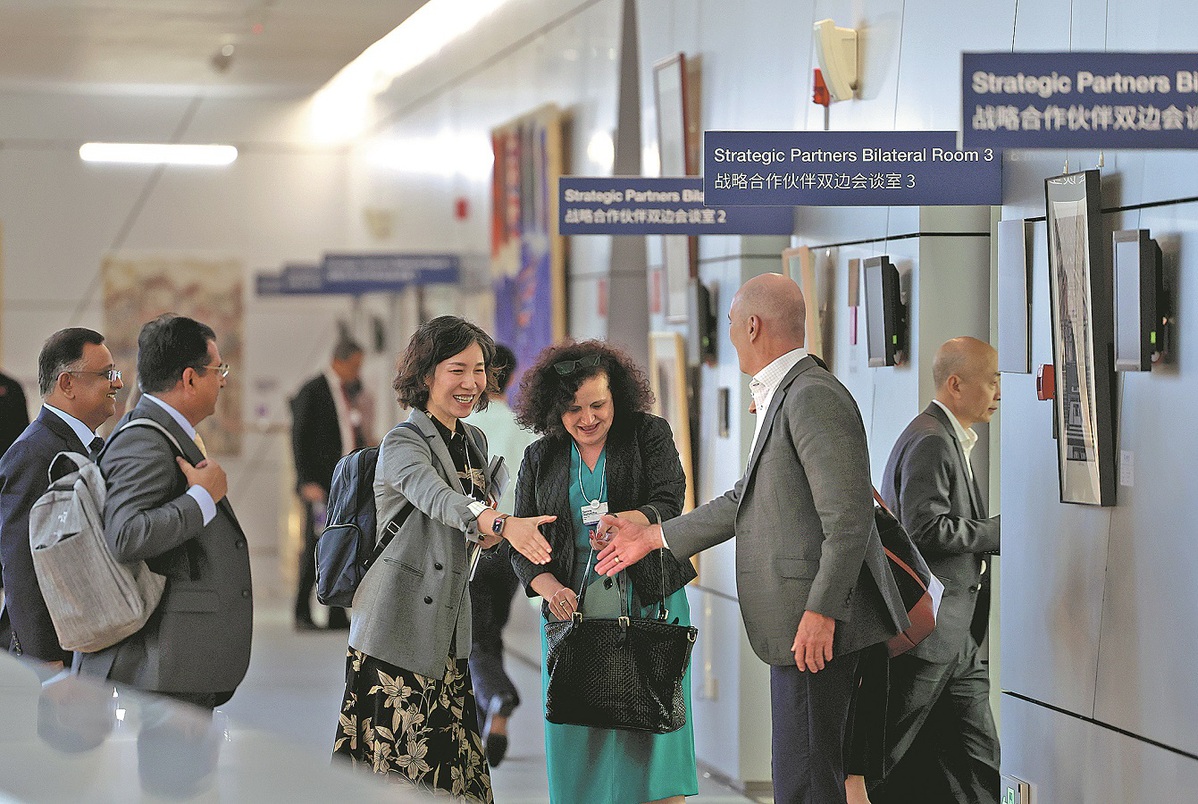
Dalian is looking to expand its foreign trade with a focus on neighboring international markets as it sprints toward becoming a city with a trillion-yuan ($139.7 billion) annual gross domestic product.
The coastal port city, in Liaoning province, has long been a vital economic center in Northeast China, and last year, its GDP reached 951.69 billion yuan.
Located at the northern side of the Bohai Strait, Dalian plans to cultivate new foreign trade opportunities by strengthening cooperation with nearby Japan and South Korea, and economies involved in the Belt and Road Initiative, said Li Hanguo, head of the Dalian Municipal Bureau of Commerce.
"We will promote innovative growth of trade in services and accelerate the building of comprehensive pilot zones of cross-border e-commerce in Dalian," said Li.
He added that the city will focus on optimizing the structure of foreign investment. This will include promoting investment of foreign capital in emerging industries such as advanced equipment manufacturing, digital economy, and health and medical care, the director said.
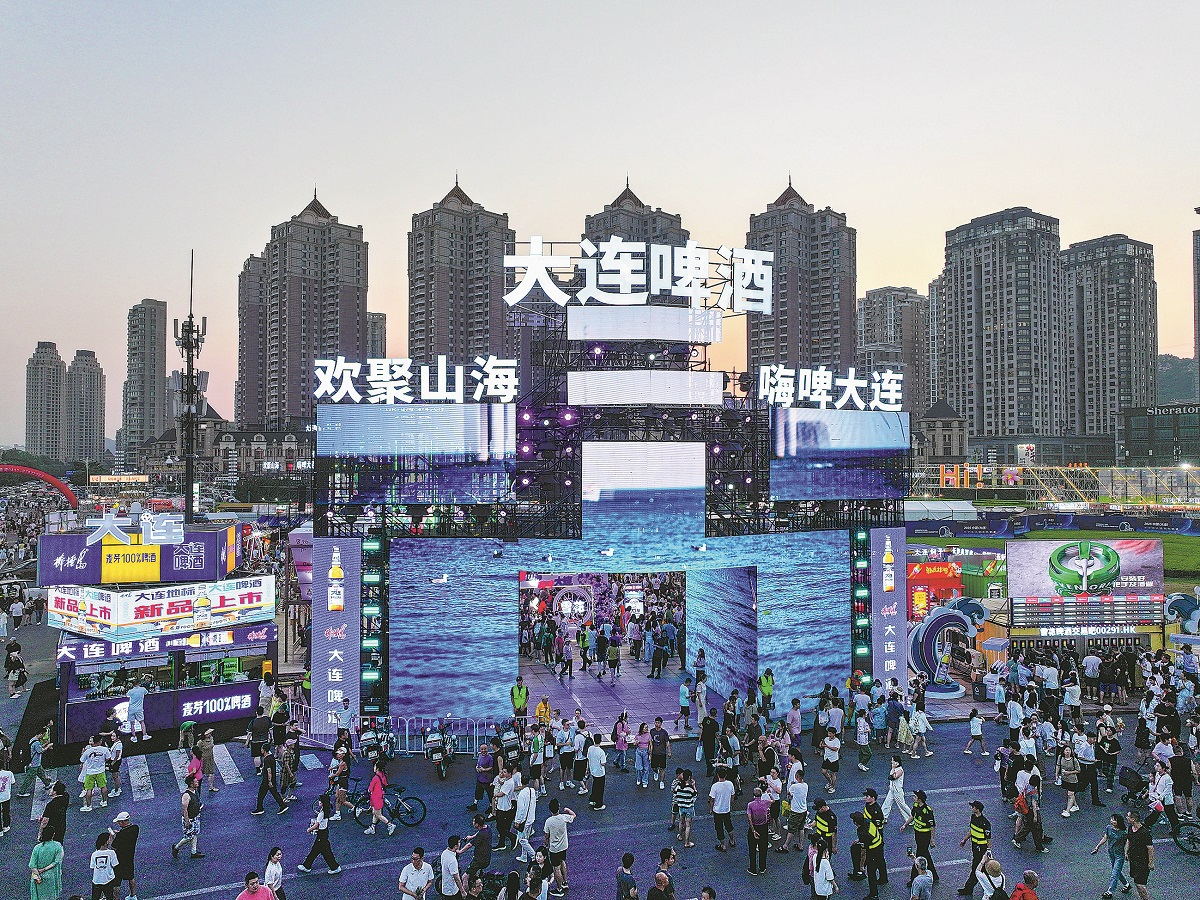
Strategic gateway
The largest port in Northeast China, Dalian serves as a trade gateway to the Pacific. It has been actively integrating itself into the development of the BRI, and helped optimize the route layout.
Currently, Dalian Port operates 106 container ship routes, including 93 foreign trade routes, covering more than 300 ports in over 160 countries and regions worldwide, its own data shows.
In the first half of this year, Dalian Port launched four new foreign trade routes. The new routes directly connect Dalian with important ports in countries including the United Kingdom, Germany and Egypt, providing efficient logistics solutions for enterprises in Northeast China.
"They mainly export and import goods such as chemicals, minerals, mechanical and electrical equipment, automobiles and accessories, as well as agricultural products and food," said Zhou Jinlu, deputy manager of the marketing department of Dalian Container Terminal Co, of the Liaoning Port Group.
In particular, exports of high value-added products such as complete vehicles, spare parts, and mechanical equipment from Dalian to India have continued to grow. In the first six months of the year, the total export and import volume of goods between Dalian and South Asia jumped nearly 80 percent year-on-year, according to Dalian Port.
Trade with Russia remains stable, with growth in the number of temporary voyages from Dalian to cities such as St Petersburg. From January to June, the total export and import volume of goods between Dalian and Russia grew by nearly 50 percent year-on-year, Dalian Port said.
In the first five months of this year, Dalian's import and export trade achieved a trade surplus for the first time in nearly a decade. The total import and export value reached 191.98 billion yuan, up 5 percent year-on-year. The export value amounted to 97.54 billion yuan, and the import value came in at 94.44 billion yuan, according to Dalian Customs.
Mechanical and electrical products, as well as petrochemical products, have also been driving strong export growth.
Over the same period, the export of ships built in Dalian reached 9.83 billion yuan, jumping 58.7 percent year-on-year, and accounting for 10.1 percent of Dalian's total export value of foreign trade.
The growth in exports to member states of the Regional Comprehensive Economic Partnership as well as the economies involved in the BRI is reflected in the significant growth of exports to Malaysia, especially the export of crude oil, Dalian Customs said. In the first five months, Dalian maintained a strong growth momentum in its import and export trade with Malaysia, reaching 21.87 billion yuan, a year-on-year increase of 27.5 percent, according to customs.
The RCEP, which came into effect in 2022, is the world's largest free trade deal, encompassing the 10 member states of the Association of Southeast Asian Nations, plus China, Australia, Japan, New Zealand and South Korea.
Coastal tourism
Dalian, with the longest coastline on the Chinese mainland at 2,211 kilometers, is also strengthening as a tourism hub.
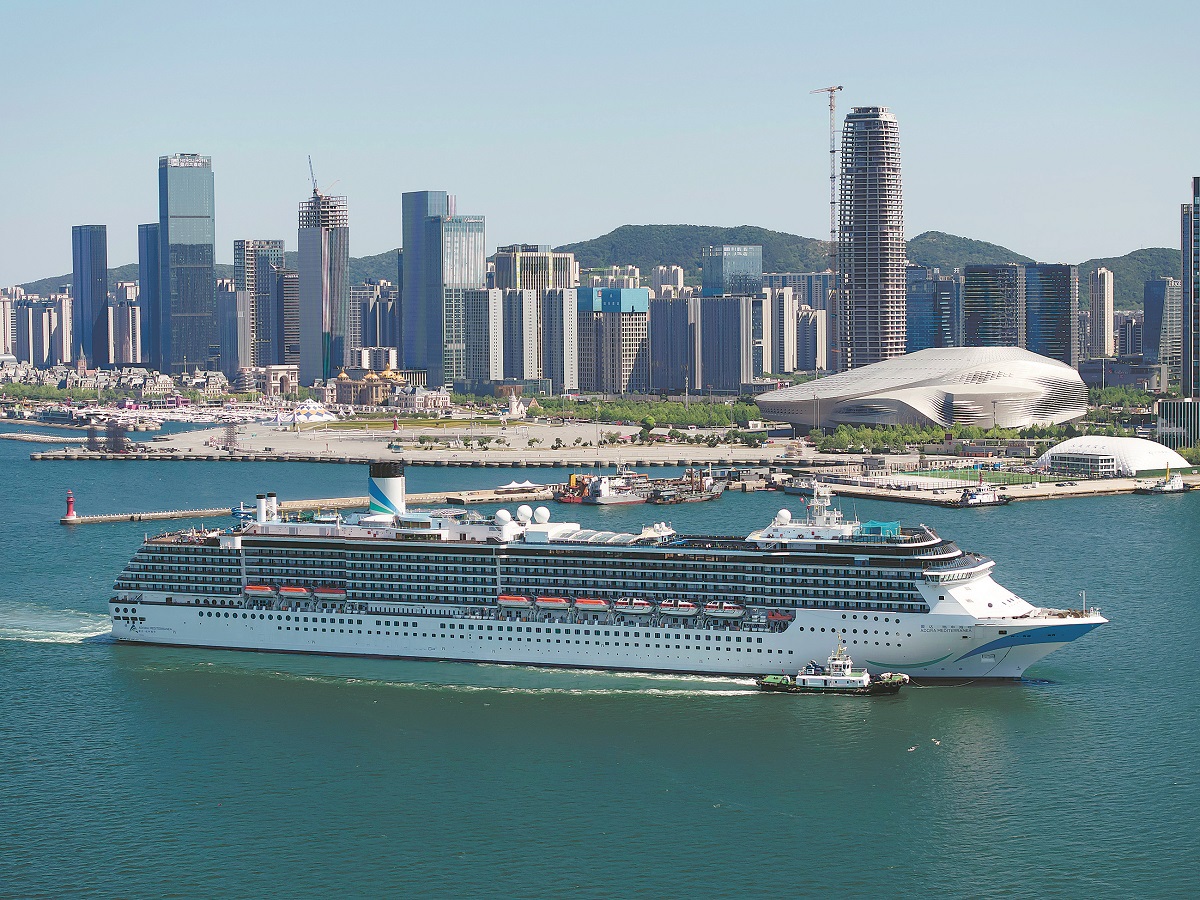
This year, voyage bookings on Adora Mediterranea, a cruise ship operated by Chinese cruise line Adora Cruises, have been in high demand in Dalian, according to the operator and travel agencies.
The popularity of voyages has been a shot in the arm for the recovery and growth of the cruise tourism market in Dalian and Northeast China, Dalian Port said.
Liaoning Port Group, the parent company of Dalian Port, has continued to renovate the berth and international waiting halls of Dalian Port, and launched services such as foreign currency exchange and sales of duty-free goods to enhance its ability to receive international cruise ships and passengers.
"Fueled by China's policies such as unilateral visa-free entry to multiple countries and visa-free transit for foreign tourists, we firmly believe that the number of cruise ships and tourists visiting Dalian will significantly grow in the future," said Wang Bo, assistant to the general manager of Dalian Port's passenger transport branch.
Dalian started receiving international cruise ships in 1976, and since then has attracted tens of thousands of tourists for sightseeing. This year, the city is expected to welcome 15 international cruise ship visits.
Besides taking cruises, more foreign tourists are arriving in Dalian as individual travelers, as China's favorable visa policies bear fruit. Late last year, China began unilateral visa-free policies for visitors from South Korea and Japan. Located close to the two countries, the number of inbound tourists to Dalian has since significantly increased.
In the first six months of this year, Dalian International Airport saw more than 89,000 passenger trips by inbound foreign visitors, up 53.4 percent year-on-year.
Of those, 61,000 foreigners entered the city with visa-free entry or under the 240-hour visa-free transit arrangement, accounting for 68.1 percent of the total, according to the local border inspection.
A total of 90 percent of inbound foreign travelers were from Japan, South Korea, Russia and Mongolia, Dalian Zhoushuizi entry-exit border inspection station said.

"In Dalian, we can watch seagulls, penguins and pandas, and all of those animals are quite cute," said a South Korean traveler surnamed Kim. "We can also taste different kinds of food. The city is very clean and it is quite fun."
To facilitate foreign tourists' purchases, by the end of May, some 26,800 merchants in Dalian accepted payment by foreign debit and credit cards. The number was 170 percent higher than the number in February 2024, according to the Dalian Municipal Bureau of Culture and Tourism.
With no intense heat in summer or severe cold in winter, the city also has a climate advantage over other travel destinations, the bureau said.
For this summer's peak holiday period, domestic and foreign carriers are ramping up efforts to launch new flights or boost the frequency of flights on existing routes to meet growing traveler demand.
State-owned China Southern Airlines, for instance, has increased flights between Dalian and Seoul to three times a day, as well as daily flights to Osaka in Japan.
Dalian Jinzhouwan International Airport — set to become the world's largest offshore airport on an artificial island — is currently under construction, with the main project scheduled for completion by 2028. It is also expected to become a regional transportation hub in Northeast China.
Meanwhile, Dalian is committed to building an internationally influential consumption center by promoting new stores, exhibitions, and screenings to further stimulate market vitality.
"We would like to build ourselves into a preferred destination for watching popular concerts," said Shan Meina, head of the Dalian Municipal Bureau of Culture and Tourism.
"The local government has issued 10 measures to promote the concert economy. This year, over 20 concerts have been scheduled throughout the year."

Soccer city
In another development, Dalian plans to further build itself into a city renowned for sports culture. The city has held various sports events such as the Dalian Marathon, the Dalian International Walking Festival, and sea fishing competitions.
Known as a "soccer city" in China, Dalian has a profound soccer culture and top soccer infrastructure. Last year, it hosted four international and 25 national soccer events, attracting over 18,000 domestic and foreign participants and over 800,000 spectator visits, according to the Dalian Municipal Bureau of Culture and Tourism.
The first soccer team in Dalian was officially established in 1921. Since then, soccer in the city has continued to develop and grow, achieving remarkable results in both domestic and international competitions.
On days when there are soccer matches, the bustling Dalian Suoyuwan Football Stadium — the first professional soccer stadium in China surrounded by the sea on three sides — becomes the hottest place in the city.
"We plan to build Dalian into a preferred tourist destination for soccer tours, and we will carry out more innovative events such as soccer carnivals," Shan said.
She added it is expected that the city's soccer heritage, its holding of different kinds of soccer matches, and exciting fan experiences at games will help drive local consumption growth and create a niche that integrates sports and cultural tourism.

Jinpu New Area
In late June, the groundbreaking ceremony for the pure electric vehicle battery project of joint venture Prime Planet Energy Dalian was held in the Dalian area of China (Liaoning) Pilot Free Trade Zone located in the Jinpu New Area of Dalian.
With a total investment of 3.7 billion yuan, the new project is expected to achieve annual output value of 4 billion yuan once it reaches full production capacity.
The project is expected to fill a gap in the high-end power battery industry in Dalian and boost the development of the entire industrial chain of new energy vehicles in the city.
Jinpu New Area, founded in 2014, is the country's 10th and Northeast China's first State-level new area. The area handles over 70 percent of the foreign trade cargo transportation volume in Northeast China, and over 98 percent of the foreign trade container transportation volume in the region.
The city's core port areas are located in Jinpu New Area, and it operates a number of specialized terminals for containers, automobiles, ores and other goods, according to Lyu Dongsheng, director of Jinpu New Area's administrative committee.
Targeting five strategic emerging industries including digital economy, new energy, new materials, low-altitude economy, and the marine economy, the new area has continued to shape new competitive advantages.
It is accelerating the localized use of artificial intelligence models such as DeepSeek, and steadily promoting the construction of a hydrogen energy industrial park, a new material industrial park, and an ocean economy industrial park.
Lyu said Jinpu will strengthen alignment with international high-standard economic and trade rules, promptly adjust and optimize strategies for institutional innovation, and continuously roll out high-quality innovative outcomes that are highly beneficial to enterprises and that are replicable.
Global investors are showing greater interest in Chinese financial assets as the nation's shining economic prospects help them to diversify their allocations from US dollar-denominated assets, a senior executive at global wealth manager UBS said.
In line with that trend, UBS is committed to functioning as a bridge for global investors to invest in Chinese assets as the country widens its financial opening-up, said Thomas Fang, head of China global markets at UBS.
"We've been pounding the table that the overall underweight of the China assets would not be sustainable. With the September policy pivot (which sharpened policymakers' commitment to economic growth), more and more investors are gaining confidence in the Chinese markets, both A and H shares," Fang said in an exclusive interview with China Daily.
The confidence has been underpinned by the country's robust economic growth this year, Fang said, with UBS having upgraded its full-year China GDP growth forecast to 4.7 percent. The Chinese economy expanded 5.3 percent in the first half.
Global investors' push for broader asset allocation across regions and asset classes is also boosting demand for Chinese assets, Fang said, given that trade negotiation outcomes between the United States and other economies can drive significant fluctuations of a particular asset class.
"Global investors are really looking at diversifying away from US dollar assets. That could benefit European and Chinese equities," Fang said.
"Assets listed in Hong Kong present themselves as a more attractive alternative to US dollar assets. Investors can potentially participate in the upside from the fundamentals and also the attractive valuation of Chinese companies. The Hong Kong dollar is pegged to the US dollar, which also drives demand."
In remarks made on the sidelines of the 16th Annual Meeting of the New Champions, also known as the Summer Davos, in Tianjin recently, Fang said the A-share market, with its depth and breadth and more attractive valuation versus H shares, has the potential to catch up with the performance of the H-share market.
The A-share benchmark Shanghai Composite Index rose 0.5 percent to close at 3534.48 points on Friday, marking the fourth consecutive week of increase, up 2.61 percent so far this month. Hong Kong's Hang Seng Index has risen about 3 percent this month.
UBS sees leading companies in China's technology and internet sectors demonstrating their potential for earnings, with some of them not only growing domestically but also thriving overseas, Fang said.
"If that uncertainty (surrounding tariff talks and investment restrictions between China and the US) is removed, global investors will definitely look to the tech sectors and many names in the new consumption sector. All those can potentially propel the valuation of Chinese equities."
The increased interest by global investors in Chinese assets, combined with China's steps for financial opening-up, means UBS sees more development opportunities to act as a channel for global investors into the Chinese market, seeking more licenses to expand its business in China.
"Our local operating entity, UBS Securities, has just become 100 percent fully owned. With that, we're looking at plans to grow our operations further."
At the 2025 Lujiazui Forum in June, China's top financial regulators unveiled a raft of new opening-up measures, including widening foreign institutions' access to financial business pilot programs and improving the qualified foreign institutional investor, or QFII, program to facilitate overseas investment.
Fang said that recent opening-up policies offer global investors more instruments — ranging from commodity futures to listed options — to invest in China under the QFII scheme, facilitating their risk management and helping them take bigger positions here.
Contact the writers at zhoulanxv@chinadaily.com.cn

TIANJIN — Flender Group, a leading global supplier of mechanical drive systems based in Bocholt, Germany, will continue to maintain its firm presence in China to serve customers and markets, Gou Jianhui, chairman of the board and CEO of Flender Ltd China, told Xinhua News Agency during the Summer Davos forum in June.
Themed "Entrepreneurship for a New Era", the 16th Annual Meeting of the New Champions, also known as Summer Davos, took place from June 24-26 in North China's Tianjin municipality.
The event attracted over 1,700 leading figures from more than 90 countries and regions, and focused on global economic trends, technological innovation, industrial transformation and China's macroeconomic outlook.
Having attended the forum three times, Gou described it as a vital platform for enterprises to track economic, industrial and technological shifts, improve long-term planning and continuously optimize business strategies.
"Through exchanges with global political and business leaders, experts and scholars, we have keenly grasped long-term market shifts and industrial trends, enabling us to make more forward-looking strategic decisions to remain strongly positioned in China while serving our customers and markets," said Gou.
The 125-year-old German enterprise remains optimistic about the Chinese market. Gou highlighted that China's vast market scale, rising consumer demand and pro-foreign investment policies provide fertile ground for enterprise growth.
From a single workshop with a dozen employees, Flender Ltd China, located in Tianjin, has grown into Flender Group's largest manufacturing base for gearboxes and generators outside Germany. It now occupies 255,000 square meters, employs over 2,000 people and attracts a total investment of 3 billion yuan ($418 million).
Gou attributed this success to the resilience and vitality of China's economy. "When we first entered the Chinese market, our operations were minimal, primarily serving international clients. Today, China has become an important part of Flender Group's global production network," Gou noted.
Over the past three decades, Flender has carried out 10 rounds of expansion and reinvestment in China, including three consecutive years of increased investment since 2021, strategically positioning itself in China's industrial and wind power sectors.
Flender has also ramped up joint research and development with Chinese enterprises, enhancing its technical capabilities and innovation strength. Today, the company is accelerating its digital transformation to boost product and technological innovation while reducing raw material and energy consumption. Many of its products developed in China have already entered mass production.
"China's dedication to mutually beneficial cooperation, trade liberalization and investment facilitation ensures market stability and predictability, instilling confidence in investors to pursue long-term China strategies," said Gou. "Investing in China means investing in the future. The Chinese market holds great possibilities, awaiting enterprises to further explore and cultivate."
Xinhua
ACWA Power, a Riyadh, Saudi Arabia-based energy and water desalination giant, remains deeply committed to investing in China and is set to strengthen its foothold in China's rapidly growing renewable energy sector, said its top executive.
ACWA Power's founder and chairman, Mohammad A. Abunayyan, expressed strong optimism in the country's renewable energy market and long-term economic prospects, and plans to further expand its presence to meet growing demand in the country.
"China, now the world's largest renewable energy market, represents a key opportunity for ACWA Power to scale its expertise in green energy solutions," Abunayyan said on the sidelines of the Summer Davos meeting held recently in Tianjin.
The China market will play a key role in ACWA Power's energy-sustainable development strategy. By 2030, ACWA Power plans to expand its global asset base to approximately $250 billion, with investment in the China market expected to reach $30 billion to $75 billion.
He highlighted China's increasing importance to the company's global strategy, positioning it as the second most important market globally, only after Saudi Arabia.
"As the world's largest renewable energy market, China, a strategically vital market with immense long-term potential driven by robust demand and a commitment to renewable energy and advanced technologies, for us is extremely important, leading the way in clean energy," Abunayyan said.
"China's commitment to innovation, massive market size and opening-up policies represent key drivers for continued investment and growth in the sector."
Following years of collaboration with Chinese firms in third-party markets, the Middle East energy conglomerate formally entered China's renewable energy landscape this year, securing agreements for over 1 gigawatt of renewable energy projects across several provinces in the country, eyeing a multidecade investment strategy focused on solar, wind, desalination and green hydrogen.
Earlier this year, the company secured partnerships with two of China's major renewable power producers — Sungrow and Mingyang Smart Energy — to jointly develop and invest in solar and wind projects that will contribute to China's ambitious decarbonization targets.
The company is also exploring prospects in offshore wind, water desalination and green hydrogen, eyeing to invest heavily in research and development in China in the years to come.
Industry experts believe that due to the resilient demand growth, China has become the focus of multinational corporations.
Propelled by ambitious carbon neutrality goals and significant renewable energy investments, China presents a highly attractive market for global companies, said Lin Boqiang, head of the China Institute for Studies in Energy Policy at Xiamen University.
Engaging in this dynamic market provides access to the world's largest energy consumer base, enables diversification from fossil fuels and secures a strategic foothold in the global energy transformation, he said.
Abunayyan expressed strong confidence in China's economic trajectory, particularly its long-term potential and the quality of its growth, pointing to the huge demand within China, driven by its large population, growing middle-income group and the increasing energy needs from technological advancements like artificial intelligence.
This demand underpins ACWA Power's confidence in the market's long-term viability, he said.
A key focus area for its investment in China is desalination, which Abunayyan identified as the company's top priority sector in the market.
The company, the world's largest desalination player, said it is working to localize the components and supply chain for desalination within China, not only for domestic projects but also for use in its global ventures.
Abunayyan praised the Chinese government's efforts to improve the foreign investment environment in recent years, citing increased transparency and openness toward MNCs.
While acknowledging that the current global environment is "not easy" due to geopolitical tensions and potential short-term supply chain issues, Abunayyan maintained a resolutely optimistic stance on China's long-term outlook.
"I am very confident about the long term and ACWA Power will continue leveraging its strong existing partnerships with Chinese companies, including State-owned enterprises as well as private firms."
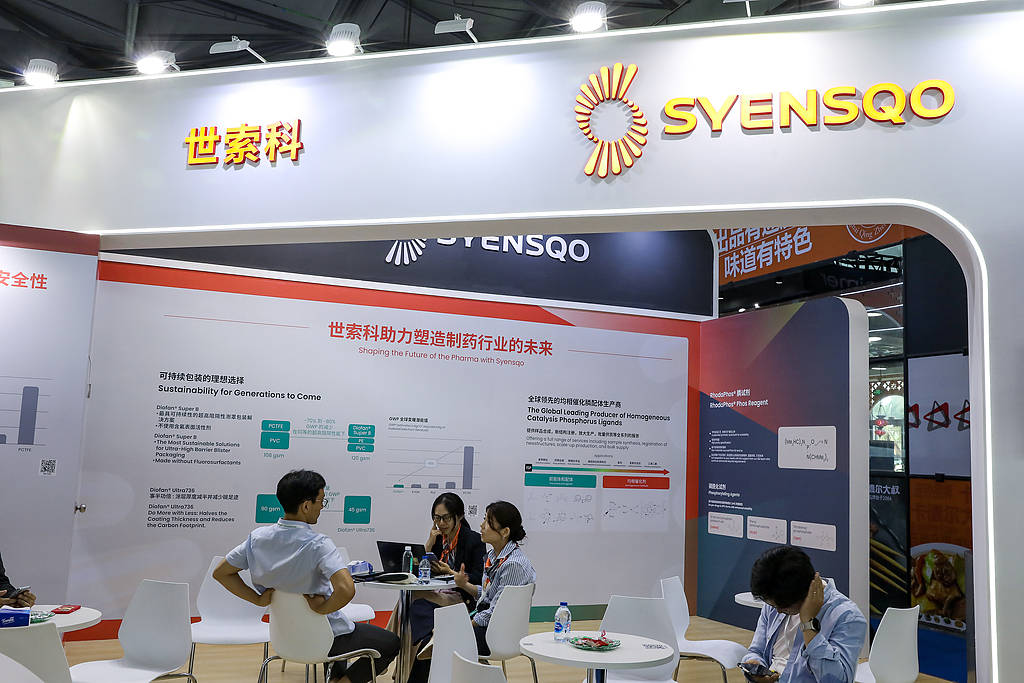
Global specialty chemicals company Syensqo remains committed to investing in China, and is optimistic about its long-term economic prospects, its top executive said.
"Syensqo aims to double our performance in China to meet the high and increasingly sophisticated demand in the country, the world's largest chemical market," said Ilham Kadri, CEO of Syensqo, on the sidelines of the Summer Davos meeting held in Tianjin last week.
Kadri highlighted China's crucial role in the global chemical industry, which she said accounts for half of global output while supporting sectors from lightweight materials and electrification to connectivity and biotechnology.
"China is a great market for Syensqo and for the chemical industry in general," Kadri said.
"China is around 15 percent of our business today and I still believe we need to double in China, because there is high demand and the demand China needs from the specialties is becoming more sophisticated and more sustainable."
Syensqo, which emerged as a standalone company in late 2023 following a demerger from Solvay, has been present in China since the 1980s.
Kadri emphasized the company's strategy of "China for China", mirroring approaches for other major regions like the United States and Europe, to build resilient and cost-effective value chains closer to customers.
To support this strategy, Syensqo recently established a headquarters in Shanghai. The company also continues to invest in production capacity, having recently doubled its compounding capacity in Changshu, under Suzhou, Jiangsu province.
Kadri acknowledged short-term challenges facing the global industry, including volatility, tariffs, and geopolitical events impacting trade and shipments. However, she expressed strong optimism about the medium and long term, believing that crises bring opportunities and learning.
"I truly believe it is short term," she said of the current volatility.
"I'm very optimistic about the Chinese market, considering the increasing sophistication of demand in China driven by local industry champions and a growing middle-income group seeking high-value, sustainable products and solutions in areas like clean mobility (electric vehicles), personal care, and home care."
Kadri also sees significant opportunity in partnering with Chinese original equipment manufacturers (OEMs) and industry players as they expand globally, particularly into Europe.
Syensqo can leverage its existing production infrastructure and knowledge of regulatory frameworks in those regions to support Chinese companies establishing operations abroad, she said.
The company signed a Strategic Partnership Framework Agreement with China Petroleum & Chemical Corporation (Sinopec) in April to foster collaboration in advanced materials and specialty chemicals in various sectors, including commercial aerospace, transportation, energy, electronics, and industrial fields.
The collaboration will also delve into supply chain management and sustainability initiatives, including the use of circular chemicals and reducing carbon footprints, it said.
China Petroleum and Chemical Industry Federation (CPCIF) has forecast that China's petrochemical sector is expected to bolster its profits this year, a key turning point after a period of challenges.
China's petrochemical sector has overcome its downturn, achieving stabilization in 2024 and is now showing signs of recovery, said Fu Xiangsheng, vice-president of the federation.
Data released by the federation reveal that the country's petrochemical sector's revenue rose to 16.28 trillion yuan ($2.27 trillion) last year, up 2.1 percent year-on-year, amid an intricate landscape.
"China moved from maybe imitation 30 years ago to innovations," Kadri noted, adding that other regions are now asking Chinese players to onshore their disruptive technologies. "We see it as a big opportunity to support Chinese transplants."
Kadri said she is confident of the broader foreign business environment in China, since the country has been opening-up and introducing new measures to bolster its reforms.
Syensqo invests where a clear business case exists, driven by real market demand and the ability to operate in a "friendly ecosystem "that protects investments, including intellectual property and assets, she said.
Kadri, who co-chaired this year's Summer Davos, said the meeting was a timely and critical platform for dialogue on creating "new champions" in a changing world through collaboration and constructive curiosity.
She expressed high expectations for engaging with Chinese authorities and industry leaders to discuss China's vision and find solutions to shared challenges.

Guests from around the world were invited to explore Tianjin through six curated designed routes to learn about the city's history, culture and innovative development on Thursday, the final day of the 16th Annual Meeting of the New Champions of the World Economic Forum, or Summer Davos.
Three of these routes focus on technological advancements, including visits to the key national scientific facilities such as the Cell Ecology Haihe Laboratory and the Large-Scale Earthquake Engineering Simulation Research Facility, according to the organizing committee.
Guests also toured companies exemplifying the upgrading of traditional industries, such as Haier and Tianjin Rongcheng Iron And Steel Group. Additionally, visits were made to robotics companies and research institutions centered around artificial intelligence.
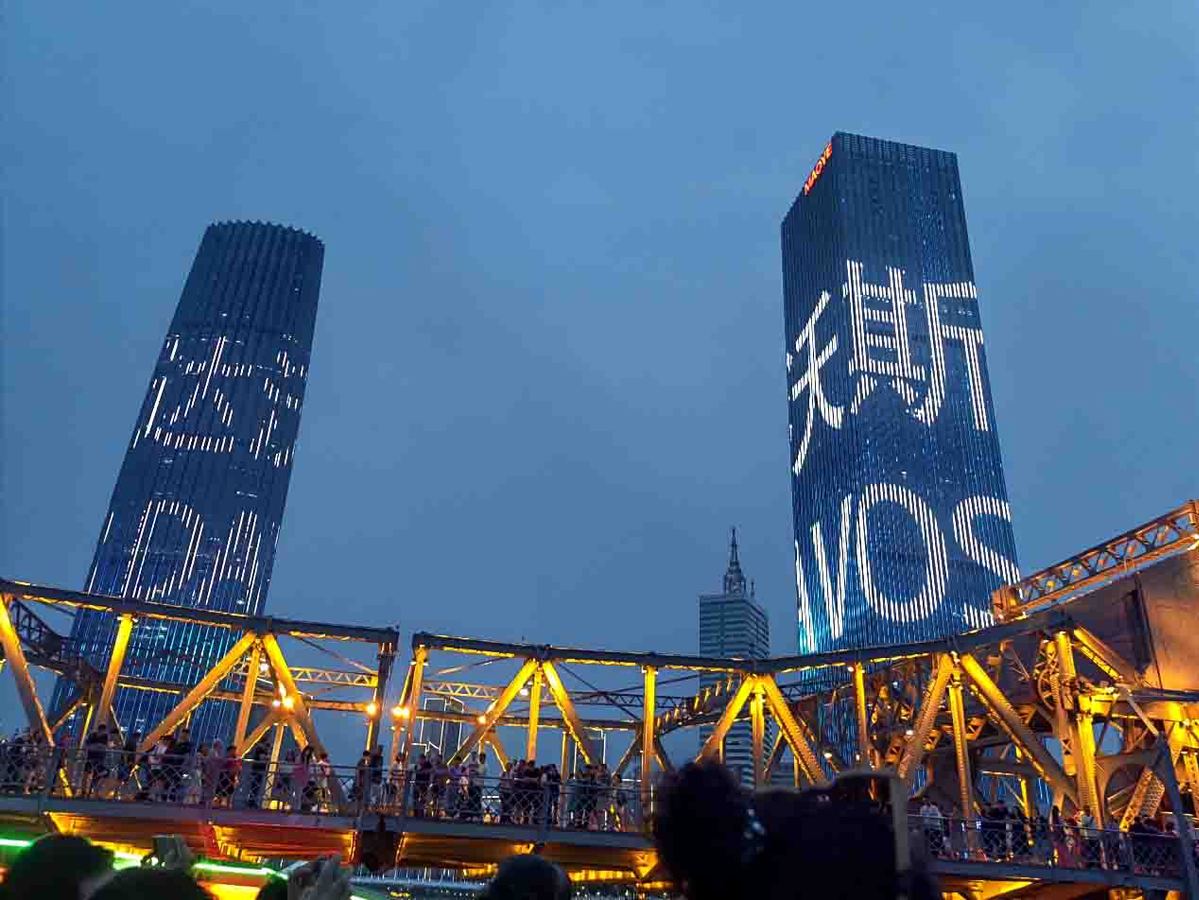
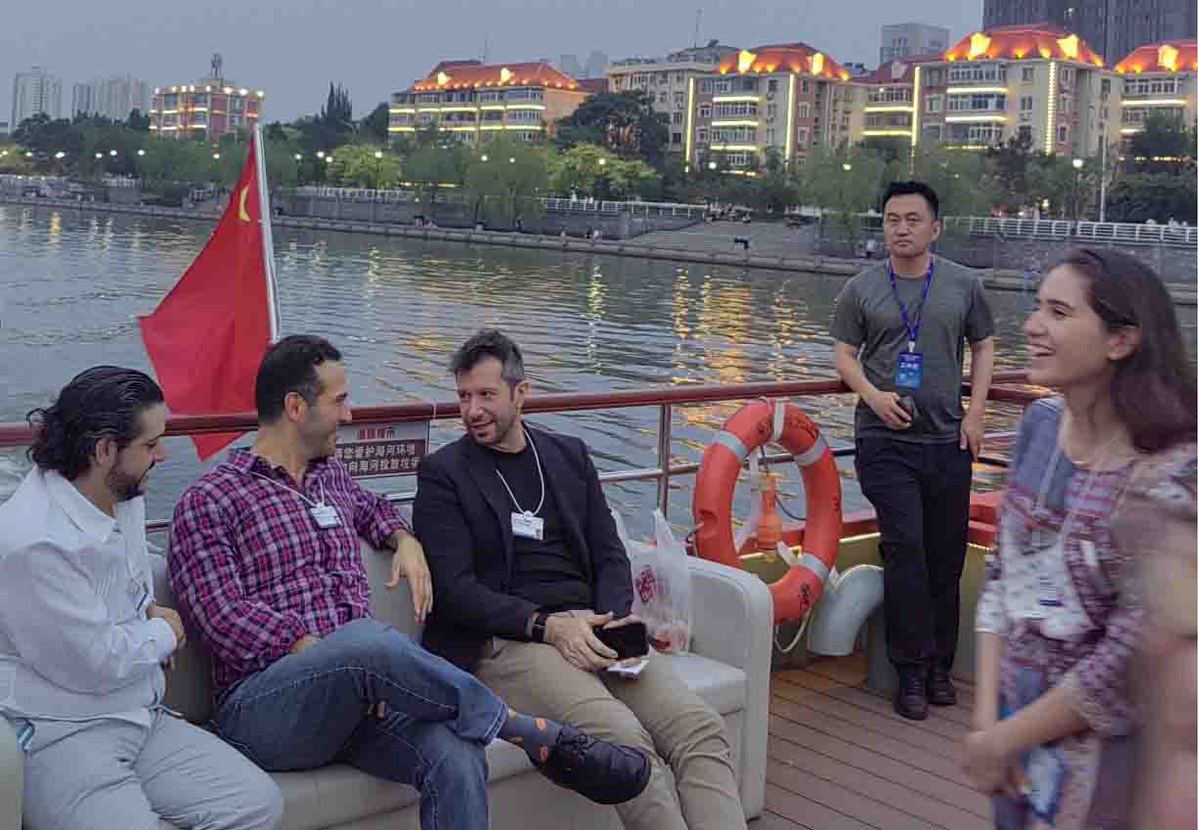
The other three routes covered cultural landmarks, offering horse-drawn carriage tours of the Five Great Avenues, visits to Haihe River cruises, Italian Style Town, and Tianjin Grand Theatre.
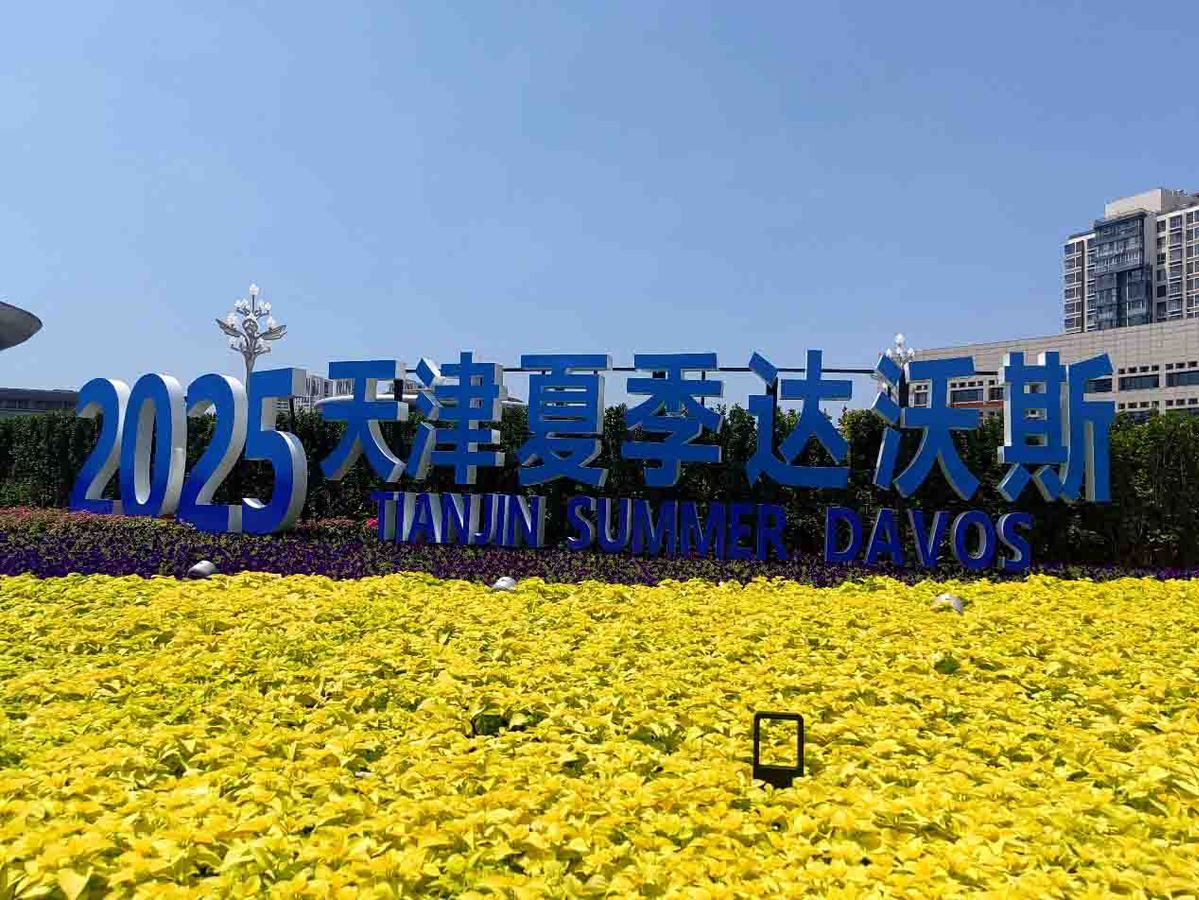
"This is the eighth time the Summer Davos has come to Tianjin," said Li Wenhai, vice-mayor of Tianjin, during a pre-event press conference. He explained that the tours were designed to showcase Tianjin's unique industrial structure and rich cultural heritage, providing a comprehensive view of the city's charm to the attendees.
"We warmly welcome dignitaries, international organizations, global business leaders, and media friends to gather in Tianjin, promote high-quality development, and create a better future together," he said.
Mo Wenbo, a Chinese Singaporean who had previously worked in Tianjin, said, "The bridges over the Haihe River, like the Dagangming Bridge and Beian Bridge, beautifully blend Chinese and Western elements, making a lasting impression. The changes in Tianjin are astonishing - the city is more open, prosperous, and developed beyond imagination".
"This is my first time in China. Tianjin is stunning. The Five Great Avenues have preserved so many exquisite buildings so well, which reflects the respect Tianjin people have for history," said Martina Alvarado, a representative from Ecuador visiting China for the first time.
"Tianjin's hosting of the Summer Davos serves as a bridge for dialogue between the city and the world, and the six tour routes vividly showcase its charm," said Lu Ruotong, a student volunteer from Tianjin University.
"As the forum concludes, Tianjin — a city full of vitality and opportunities — will take this event as a catalyst to continue its path of open, inclusive and innovative development hand in hand with the world, creating more wonderful stories and painting a beautiful blueprint for high-quality development," she added.
Lu Ruotong contributed to this story.
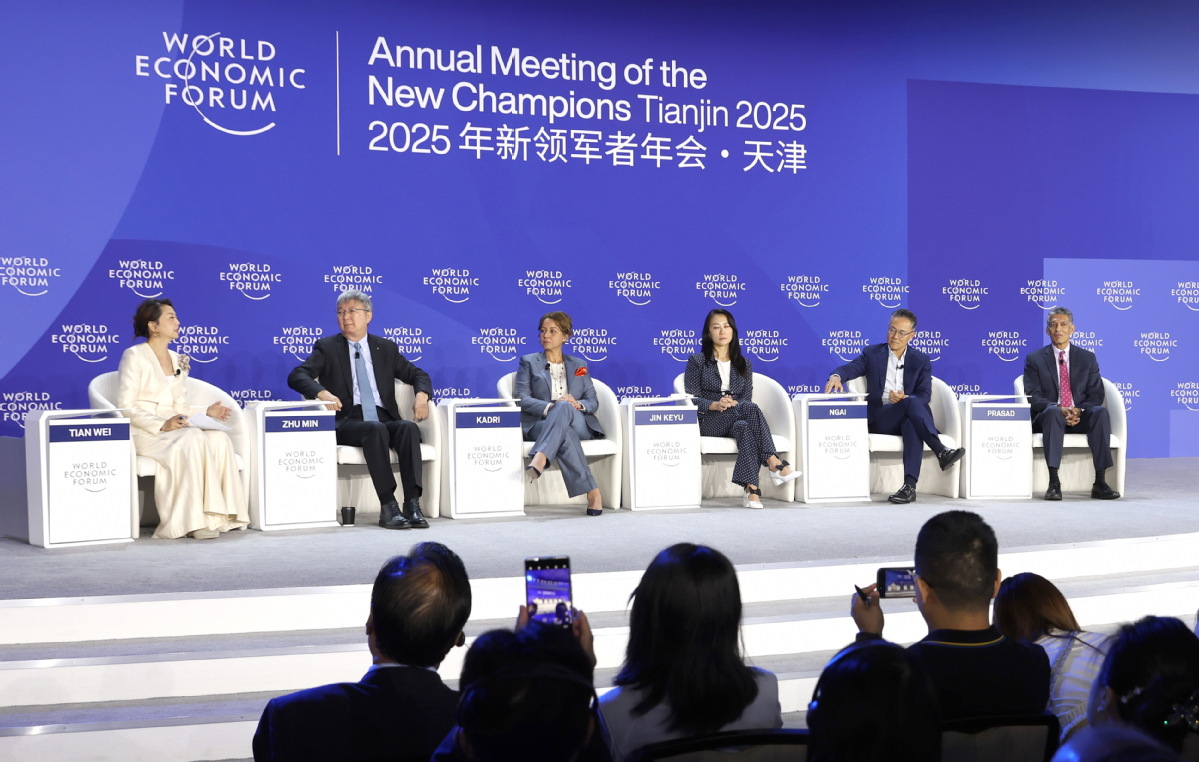
ISTANBUL -- Amid global economic headwinds and profound technological transformations, the Summer Davos Forum provides a platform for fostering dialogue on trade, innovation, and international cooperation, a Turkish expert has said.
The Summer Davos Forum, also known as the Annual Meeting of the New Champions, brings together global leaders, policymakers, and business experts to discuss pressing economic and technological challenges amid a shifting geopolitical landscape.
"When the global economy is under strain, concerns about trade wars and protectionist policies tend to increase," Selcuk Colakoglu, director of the Ankara-based Turkish Center for Asia-Pacific Studies, told Xinhua in an interview.
"In this context, the summer forum held in China offers an important opportunity to address key challenges facing global trade and cooperation," he said.
Colakoglu emphasized the importance of upholding free trade rules to maintain the stability of international business.
"Safeguarding free trade rules is essential to keep international business running as usual. Otherwise, more problems will arise from these issues," he said.
He commended China's continued support for trade liberalization and multilateral cooperation through mechanisms such as the World Trade Organization.
"The forum will be a crucial platform to facilitate cooperation among countries, business organizations and multinational companies," Colakoglu said.
The event, he added, will also highlight the ongoing transformation of China's economy.
"With the target of high-quality development, China is undergoing significant economic transformation," he said. "By strengthening its large domestic market, China also contributes to global economic momentum."
He added that both Chinese enterprises and international companies are encouraged to invest and participate in the domestic market.
As an expert in Asia-Pacific affairs who closely follows China's economic engagement with emerging markets, Colakoglu also underscored the forum's role in examining the transformative impact of emerging technologies, particularly artificial intelligence, on both developed and developing economies.
"There is a need to adapt to new technologies and reassess economic models globally," he said, noting that the forum provides an opportunity for international dialogue on these issues.
Looking ahead, Colakoglu expressed optimism that the forum will help global leaders navigate economic uncertainties and foster cooperation to build a more resilient and inclusive world economy.
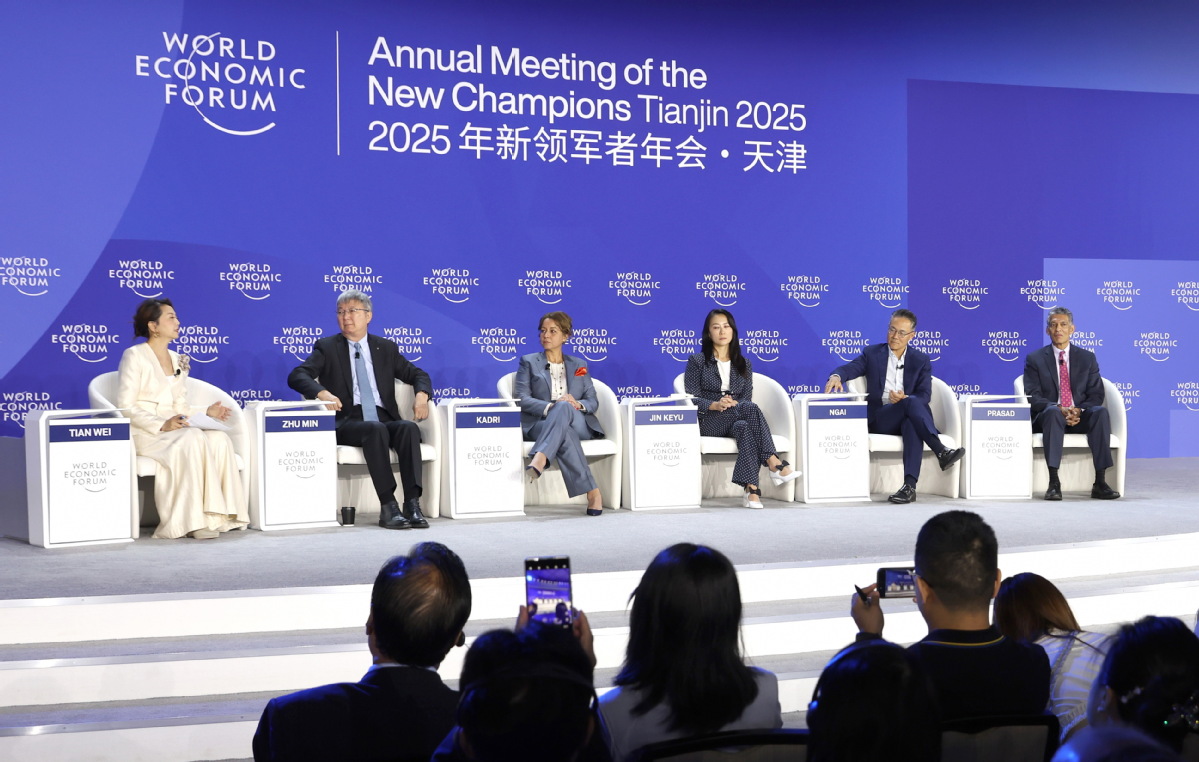
China's accelerating technological breakthroughs and efforts to stimulate domestic consumption are laying the foundation for sustainable economic growth as the country navigates global headwinds and transitions toward a high-income economy, experts and business leaders said on Wednesday.
Zhu Min, former deputy managing director of the International Monetary Fund, said China is entering a pivotal phase of innovation, underpinned by its large engineering talent pool and strong industrial foundation.
"With all the massive rich scenario China has in industry, in the next 24 months, I imagine we'll see a hundred DeepSeek-type software (products) emerge," Zhu said at a forum during the 16th Annual Meeting of the New Champions, also known as the Summer Davos, in Tianjin on Wednesday, referring to China's recent homegrown AI breakthroughs.
"'AI plus' is coming in a big way. It will have a huge impact on the whole economy."
Jin Keyu, professor of finance at Hong Kong University of Science and Technology, echoed this sentiment, saying China's unique combination of advanced technology and large-scale manufacturing enables it to lead in "scale-based, cost-reductive, leading-edge innovation".
"Even if the US could be the leader in inventions and breakthroughs, production and diffusion of technology is just as, if not more, important for the benefit of the economy," Jin said, adding that with AI now being pushed into "every plausible sector "through China's "AI plus" program, "this is kind of awe-inspiring".
Yet she warned that innovation alone cannot propel China to prosperity. "China is never going to be a rich country unless it becomes a big consumer country," she said, pointing to rising opportunities in second and third-tier cities where talent and services are rapidly expanding.
Joe Ngai, chairman of McKinsey China, said Chinese consumers are adapting with agility to economic shifts. "Chinese consumers are very savvy. They are trading for the same quality, for a lower price. They are not sacrificing quality," Ngai said.
He emphasized that value-for-money consumption is rising, not declining.
"They're very savvy customers …the value-for-money segment has been growing and that growth is very, very inspiring."
Despite challenges ahead, experts remain broadly optimistic about China's 2025 growth outlook.
"I'm relatively confident that China will likely hit its around 5 percent growth target this year," said Liu Qiao, dean of Peking University's Guanghua School of Management.
Liu cited the resilience in consumption and China's ample wiggle room for fiscal expansion, saying targeted fiscal tools such as special treasury bonds or modestly expanded deficits could counter uncertainties and spur demand.
From a financial perspective, optimism is also returning. "More and more investors are gaining confidence in China markets, both A-share and H-share markets," said Thomas Fang, head of China global markets at UBS.
Fang said the policy pivot since September has reassured markets. "They have this 'whatever it takes' policy … if it's not enough, they will add more," he said. "We want to see how the property downturn plays out and whether investor confidence continues to improve. It is a journey, but we are confident the policymakers have their fingers on the pulse."
Zhang Xiaoyan, associate dean at Tsinghua University's PBC School of Finance, pointed to recent homegrown AI breakthroughs like Deep-Seek as proof of China's innovation capacity. "The whole country is trying hard to boost the innovation environment."
Rapidly evolving artificial intelligence technologies are being applied to a wider range of sectors and have become a vital force bolstering China's economic development, as the country recognizes AI as an essential tool in fostering new quality productive forces and activating new growth drivers, entrepreneurs and experts said on Thursday.
China is at the forefront of AI application globally, which is not only playing a pivotal role in boosting its productivity, but is also driving the transformation and upgrading of its traditional industries, they said.
The entrepreneurs and experts made the remarks during the World Economic Forum's Annual Meeting of the New Champions, also known as the Summer Davos, which was held in Tianjin from Tuesday to Thursday.
Artificial intelligence, which is already reshaping the industrial landscape, is expected to be the biggest technological revolution in the next 50 years, said Zhou Yunjie, chairman and CEO of Chinese home appliance giant Haier Group.
"Currently, the deployment of AI in enterprises mainly concentrates on manufacturing, research and development, sales, procurement and services," he said.
Every industry will integrate with AI, and any enterprise that does not embrace AI will eventually be weeded out, Zhou said, adding that his company has invested heavily in developing large language models and is promoting the adoption of AI across various fields, such as household appliances and industrial internet.
Zhu Min, former deputy managing director of the International Monetary Fund, said that China will make significant progress in the use of AI technologies in the next 18 months to two years, highlighting that the country's vast consumer market of 1.4 billion people and abundant industrial application scenarios present unique advantages for the development of AI.
China has surpassed the United States in the number of academic papers issued on artificial intelligence, taking the top spot worldwide, Zhu noted, adding that such papers increasingly focus on the specific industrial applications of AI.
This year's Government Work Report stated that China, under its "AI Plus" initiative, will work to effectively combine digital technologies with its manufacturing and market strengths, support the extensive application of large-scale AI models, and vigorously develop new-generation intelligent terminals and smart manufacturing equipment.
Samantha Zhu, chairperson of Accenture Greater China, said it is clear that China is emerging as an innovation-driven economy, with its breakthroughs in areas such as AI and robotics highlighting its growing capability in critical technologies that underpin long-term competitiveness.
"The recent wave of AI innovation, led by open-sourced large language models, is so encouraging that companies are quickly mobilizing themselves to harness such technologies," she said.
The entrepreneur noted that there is a strong momentum of AI-driven transformation, with businesses quickly integrating AI into decision-making, operations and customer engagement. "Looking at the vibrant AI ecosystem, we can say that China is not just an AI market — it's a proving ground for AI adoption by enterprises at scale," she said.
According to market research company CCID Consulting, the market scale of China's AI sector will reach 1.73 trillion yuan ($241 billion) by 2035, accounting for 30.6 percent of the global total.
Li Haitao, dean of the Cheung Kong Graduate School of Business, said that China boasts a large number of well-educated talent and AI professionals, improved digital infrastructure such as 5G and computing networks, and ever-increasing innovation capabilities, which will continue to drive its explosive growth in AI.
Li Dongsheng, founder and chairman of Chinese consumer electronics manufacturer TCL Technology Group Corp, said that China's breakthroughs in large language models, along with the meteoric rise of Chinese AI startup DeepSeek, have enabled it to rapidly catch up with the US in the AI domain, while surpassing most other developed economies in terms of AI application.
As AI is embedded into terminal devices, intelligent production lines and product R&D, this cutting-edge technology will significantly improve the production efficiency and competitiveness of China's high-tech manufacturing industry, he added.
fanfeifei@chinadaily.com.cn



