

Chinese solution provides 'early warnings for all'
AI-driven forecasting mitigates weather-related risks in developing countries










Business benefits
At the Ningbo-Zhoushan Port, the world's busiest port by cargo throughput for the past 16 years, weather can disrupt a multi-million-dollar business. Located in a region in Zhejiang province prone to gales and sea fog, the port faces up to 1,000 hours of operational downtime annually.
The local meteorological bureau has developed an early-warning and control platform that integrates real-time meteorological, maritime and port data, delivering minute-by-minute alerts directly to dispatchers and operators.
During Typhoon Co-May in late July, chief forecasters updated wind forecasts in real time, enabling port managers to adjust work schedules and recover 10 hours of operating time.
In November, based on European forecasts of severe offshore winds, the safety team at Mediterranean Shipping Company in Geneva ordered several vessels to skip scheduled calls at Ningbo.
According to Lian Sheng, deputy director of the port's dispatch center, daily charter costs can run to $100,000 per vessel, so such a decision might result in massive losses.
Port officials communicated that their localized forecasting showed winds inside the harbor were milder, shielded by the Zhoushan Islands. The clarification built immediate trust. During the next cold air event a week later, MSC relied fully on the port's guidance, and its vessels operated on schedule. "It shows how precise weather services and a smart early warning system can empower port operations," Lian said.
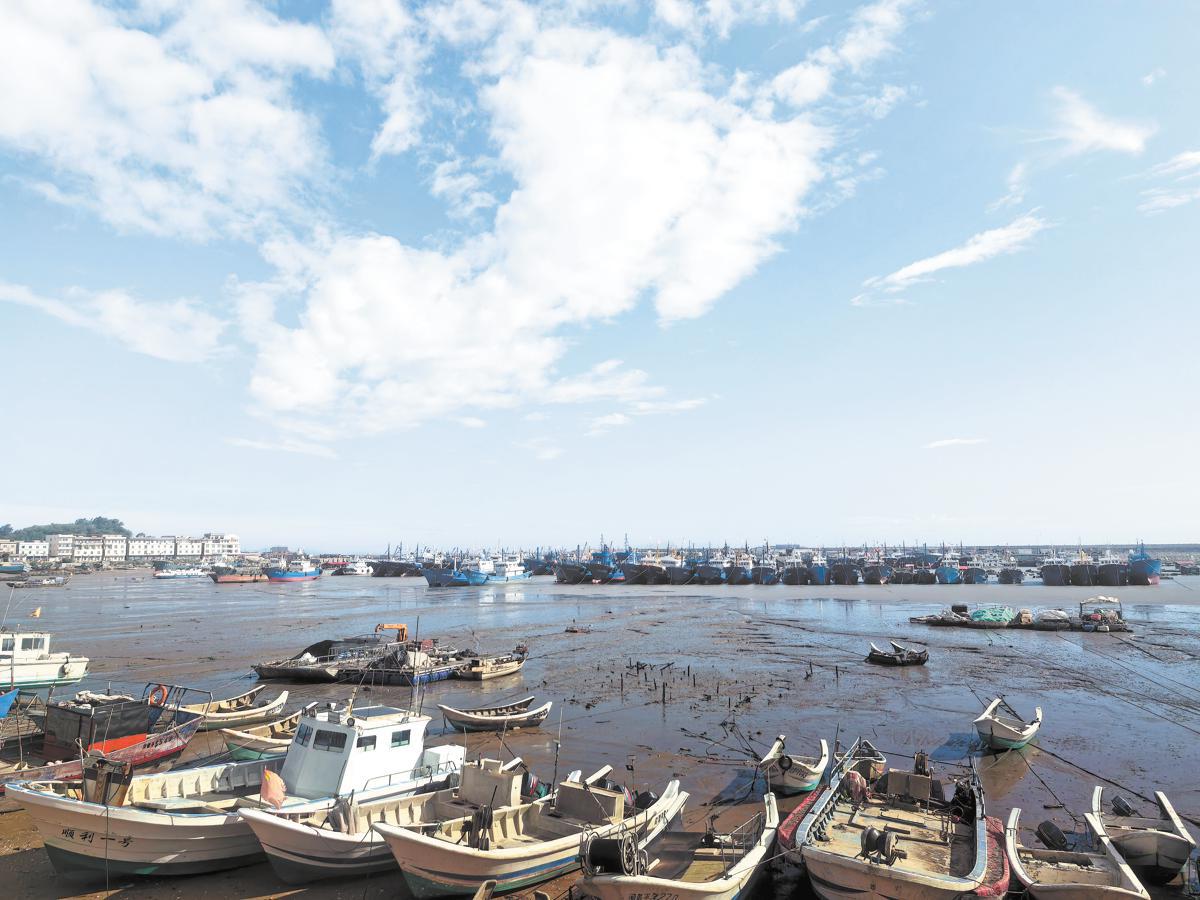
According to port statistics, the early-warning system added an estimated 98 hours of workable time in 2024 and generated 370 million yuan ($51 million) in direct economic benefits.
Meanwhile, MAZU-Urban, an urban multi-hazard early warning agent developed in Shanghai, has benefited other developing countries in realizing early warnings for all and reducing losses.
The agent integrates Shanghai's self-developed AI models, which have pushed the average lead time for severe convective weather forecasts to over four hours, said Cao Yuan, head of the Shanghai AI meteorological application innovation center.
The agent was used to successfully forecast rainfall over Kampala, capital of Uganda, and winds at Lake Victoria in Africa in March. The Uganda National Meteorological Authority sent a letter to the Shanghai Meteorological Service, expressing gratitude for the support provided by MAZU-Urban.
"The agent allows for targeted policy for each country and region," said Liu Haobo, a senior engineer from the information center at the Shanghai Meteorological Service.
The team developed guidance based on specific disaster data for Mongolia, fine-tuning the system with the help of a visiting Mongolian forecaster. When Typhoon Wipha threatened the Macao Special Administrative Region in July, MAZU-Urban was integrated with local disaster standards and rescue frameworks to provide tailored impact forecasts, Liu said.
Zhao Yang, director of the information center at the Shanghai Meteorological Service, said the model can be accessed from computers, tablets and phones, to serve professional departments, key industries and the public.
Access to the AI early warning system was handed over to representatives from Djibouti and Mongolia in July, marking the official start of MAZU-Urban's application overseas. It is now on trial in 35 countries and regions across Asia, Africa and Oceania, Zhao said.
The CMA said it plans to focus on building an open and inclusive global cooperation network for early warnings, prioritizing the needs of the least developed countries and small island developing states. Over the next three years, it will provide training for 2,000 people, 100 scholarships and 50 visiting scholar positions, said Chen Zhenlin, head of the administration.
"The introduction of the MAZU solution marks China's shift from an active participant in global meteorological governance to a contributor to major international agendas and a provider of global public goods," Chen said at a news conference in October.
He added that China will continue exploring the use of AI and other new technologies to further enhance the role of MAZU in global climate governance and disaster risk reduction.
zhaoyimeng@chinadaily.com.cn