
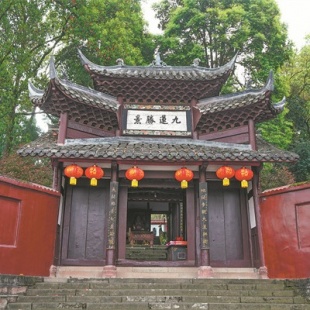



Murals of the Ming Dynasty enter the digital age









"This accurate data has laid a solid foundation for the temple's systematic protection in the future," says Yan Bin, director of the cultural relics protection center in Xinjin district.
Besides three-dimensional models of buildings, courtyards and painted sculptures, cultural relics protection workers have also detected areas at risk for the temple's murals, such as peeling, cracks, and historical repairs.
One mural was repainted during the Qing Dynasty. With the help of advanced imaging technology, part of the original Ming Dynasty painting underneath can be seen.
"In a mural, the intricate details of three layers of transparent gauze of the bodhisattva are visible under the high-definition infrared camera," he says.
During the restoration of the murals, they adopted virtual restoration techniques, using such plans as a reference for physical restoration.
Yan adds that it's important to explore and understand the Guanyin Temple's cultural significance and integrate it with digital documentation, conservation and utilization.
Based on the standards of the fourth national cultural relics census, Chengdu has put forward more accurate and detailed data collection requirements and formulated the technical specifications for the registration of cultural relics in the city, covering categories such as ancient tombs and architecture. Industry insiders call them the "Chengdu Standards".
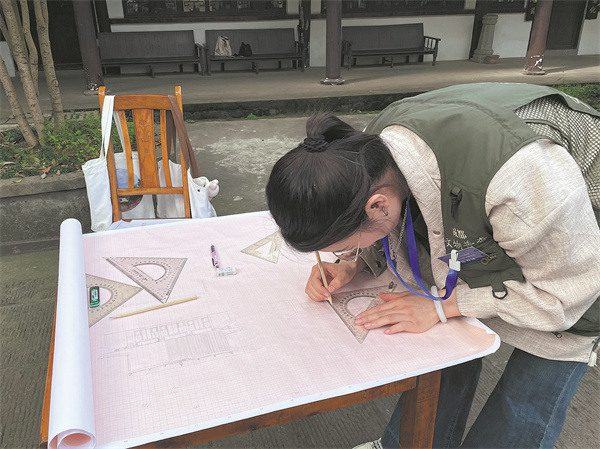
"As required by the Chengdu Standards, we submitted no fewer than 20 drawings for just one hall in Guanyin Temple, including standard floor plans, elevations and sections. The total number of drawings is considerable. The staff members have carried out meticulous, in-depth work," says Cai Yukun, an associate researcher at the Chengdu Institute of Cultural Relics and Archaeology.
She adds that ancient buildings that are not graded as protected cultural heritage sites are also included in the fourth national census, and some of them hold significant value.
One of the new discoveries that emerged from the fourth national cultural relics census in Xinjin district is the Ming Dynasty inscription on a stone stele in the Guanyin Temple.
Housed within a small hall rebuilt in the late Qing Dynasty, the back of the stele lies about 30 centimeters from a wall, with various obstacles in the vicinity, resulting in the inscription remaining undiscovered for a long time.
The inscription records the temple's history, including its origin, transformation, and Buddhist masters. It also reflects the collaborative efforts of monks, officials, scholars, and farmers in the temple's revival, a typical example of temple construction during the Ming Dynasty.
"If we lacked a responsible attitude and a meticulous approach to the cultural relics census, this stone stele inscription could easily have been overlooked," Yan says.
"The discovery provides new materials for the study of the development of Buddhism and the construction of Buddhist temples in the Ming Dynasty."
xulin@chinadaily.com.cn