


Where code meets community
From AI to embodied intelligence, COSCon 2025 revealed how open source thrives through shared ideas, volunteer effort and cross-border cooperation.








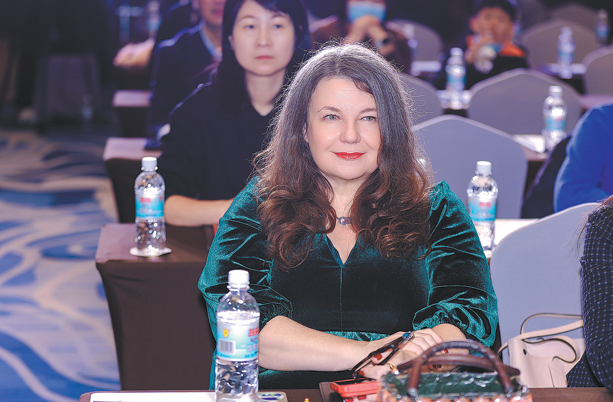
"China has long been a major user of open-source software, and Chinese developers have become increasingly active contributors to global open-source communities in recent years," Jiang said.
That trend is particularly visible in the field of large language models, where China and the United States now lead global contributions.
"Chinese companies, including Alibaba, Ant Group, Moonshot AI, and DeepSeek, have adopted open-source approaches, reflecting a broader shift toward collaborative development," Jiang added.
Despite its expanding scale, COSCon remains driven by grassroots participation. KAIYUANSHE is a nonprofit organization, and both the conference and the broader community are maintained entirely by volunteers. Many organizers, including core members of the organizing team, have full-time jobs elsewhere and contribute in their spare time.
For Yuan Gungun, a long-time member of the community, open source is as much about people as it is about code. Having worked in startups for much of her career, she sees similarities between entrepreneurial culture and open-source collaboration. "Both rely on people contributing beyond formal roles,"Yuan said. "They grow through shared goals and mutual trust."
She noted that while open-source software is widely used, its sustainability depends on active participation. "Open source is not only about sharing code," she said. "It also involves contributing back to the community, whether through technical work or other forms of support."
Yuan believes that events like COSCon play an important role in making open-source technologies more visible. "Many of them operate behind commercial products," she said. "Conferences like this help people better understand how these technologies support different industries."